
Weekend read: Energy on the front line
Russia’s ongoing assault on Ukraine’s energy infrastructure, with missile and drone strikes, has seen the country’s power cut by nearly one-third, triggering widespread outages across the nation. With winter coming, the Ukrainian authorities haven’t ruled out a worst-case scenario that would see much of Kyiv, with its population of almost 3 million, evacuated from the city, reports Ian Skarytovsky.
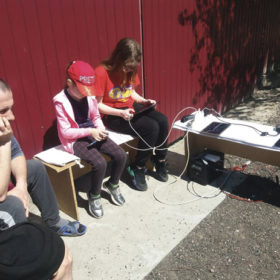
Solar aid in dark times
With Russia intent on destroying Ukraine’s energy infrastructure, a network of NGOs is taking up the challenge to donate small and mobile energy supply solutions. Astrid Schneider, a member of clean energy nonprofit Eurosolar, shared the story of the small solar kits that are making a big difference, in this month’s edition of pv magazine.
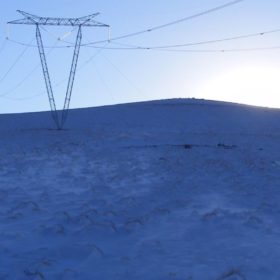
Strategically timed, transnational exchange of solar energy
Argentina and Chile are reactivating the Andes Interconnection Line to facilitate the bidirectional exchange of energy. During the day, Argentina will receive 80 MW of solar from Chile, but it will export back 200 MW of natural gas at night.
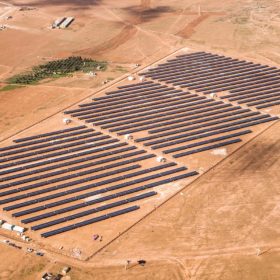
Solar in exchange for desalinated water
Israel and Jordan have agreed to pair 600 MW of solar with an undisclosed amount of storage. The deal, which was brokered by the United Arab Emirates at COP27, will see Jordan provide electricity to Israel in exchange for desalinated water.
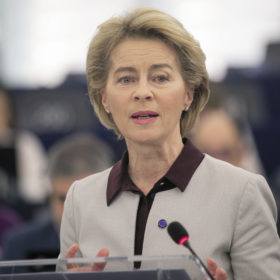
Europe’s latest U-turn could threaten renewables investment
An unexpected “non-paper” in which the European Commission signaled a U-turn away from a price cap on gas has caused a stir in what was already an agitated European energy industry.

Solar, wind compensate for decline of hydro, nuclear in EU electricity output
E3G and Ember said in a new study that solar and wind have helped to mitigate the impacts of drought across the European Union, amid a 21% decline in hydropower generation and a 19% reduction of available nuclear capacity. Wind and solar generated a record 24% of the bloc’s electricity from March to September.
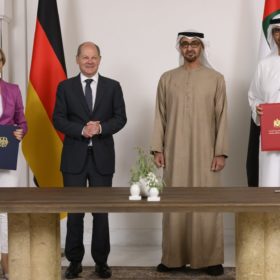
The Hydrogen Stream: GHD Group, Fraunhofer-Gesellschaft win contract for UAE national hydrogen strategy
Germany made efforts this week to expand hydrogen ties with the Gulf states, and Japan announced plans to team up with several nations to ramp up hydrogen production. ICIS, meanwhile, has started offering Europe’s first market-linked renewable hydrogen assessments.
EU proposes €0.18/kWh price cap on solar, wind
European Commission President Ursula Von der Leyen has announced a mandatory electricity usage reduction of at least 5% during peak price hours. Electricity market restructuring measures and a €3 billion ($2.9 billion) investment for a new green hydrogen bank were also on the agenda.
SolarPower Europe at odds with implications of EU windfall tax on renewables
SolarPower Europe has issued a statement opposing any moves by the European Commission to impose a lower maximum electricity price on renewables than on fossil fuel energy. EU member state energy ministers will meet this week to thrash out emergency measures to protect bill payers.
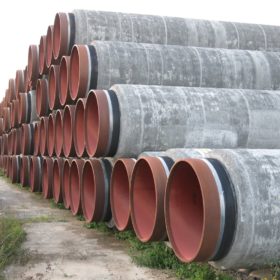
European energy without Russian gas
Scientists in Denmark have modeled the likely impacts of reduced gas supply on the European energy mix up to 2050. Their research finds that if the continent is to achieve the Paris Agreement goal of limiting global average temperature increase to 1.5 C, then gas consumption would need to be heavily reduced, anyway. In less ambitious climate scenarios, however, limited gas supplies could delay the phase-out of coal-fired electricity and lead to longer-term uncertainty over fuel and electricity prices.
