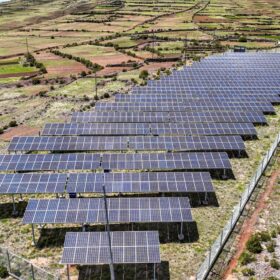
Peru records 115.5 MW of new solar in H1
Peru’s Ministry of Energy and Mines (MINEM) says the country installed 115.5 MW of new solar capacity in the first half of 2024, bringing the nation’s total installed PV capacity to around 400 MW.

Solar parks provide refuge for birds, claim Chilean researchers
Chilean researchers from Universidad Mayor say that the 10.8 MW La Colonia photovoltaic plant, built by IM2 Solar Chile and Enel Green Power, provides a habitat for birds.

Bolivian president ties coup attempt to nation’s lithium interests
Bolivian soldiers sparked controversy last week by questioning President Luis Arce, prompting allies of the ruling party, including former President Evo Morales, to describe the incident as a “self-coup.” However, Arce has blamed the the situation on entities interested in exploiting Bolivia’s lithium reserves.

Colombia’s PV capacity hits 1.2 GW
Colombia’s Mining and Energy Planning Unit (UPME) says the country’s PV capacity has reached 1,193 MW. The nation surpassed the 1 GW threshold several weeks ago with the commissioning of two large-scale solar facilities.
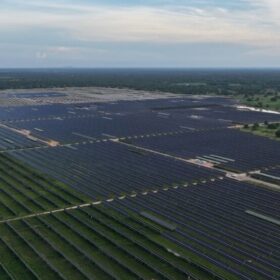
Colombia’s La Loma and Fundación PV plants begin commercial operation with combined 240 MWac
Enel Colombia’s total number of solar parks energized so far this year “represent more than 34% of the solar energy produced in the entire interconnected system of Colombia.”
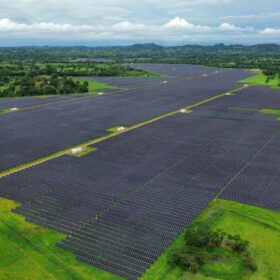
144 MW La Unión PV plant connected to Colombian grid
Spanish company Solarpack developed the $100 million photovoltaic plant in the municipality of Montería, located in the department of Córdoba. It’s one of two large-scale solar park projects the company has in Colombia.

PV installation triggers border dispute between Chile and Argentina
Chilean President Gabriel Boric complained that the solar array installed on a military base in Argentine Patagonia were located three meters inside Chilean territory. “They must remove those solar panels as soon as possible or we are going to do it,” he warned. The Argentine government recognized the error.
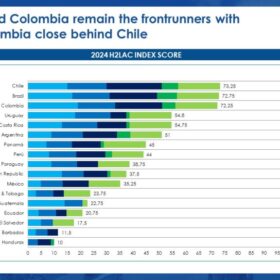
Chile, Brazil, Colombia lead hydrogen market in Latin America, Caribbean
Colombia, Brazil, and Chile lead the hydrogen market in Latin America and the Caribbean, according to new data presented by Hinicio and New Energy at the recent 4th Hydrogen Congress for Latin America and the Caribbean (H2LAC 2024).
Colombian developer switches on 83 MW of solar
Empresas Públicas de Medellín (EPM) has started operating an 83 MW solar project in Caldas, Colombia.
Argentina’s Genneia to build 273 MW of solar
Genneia has announced a joint investment of $250 million with the provincial government of Mendoza to develop 273 MW of solar projects in the departments of Malargüe and Luján de Cuyo, Argentina.
