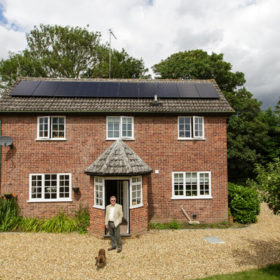
UK government figures show 902 MW year-on-year solar growth
For the 11 months up to the end of November, the U.K. added 902 MW of solar PV capacity to reach a cumulative total of 12,642 MW, which is around 7% higher than last year.
Brazil: BNDES and KFW launch $142.7 million credit facility for solar, renewables
The development banks of Brazil and Germany will jointly support, among other things, solar, wind, mini-hydro and biomass power projetcs.
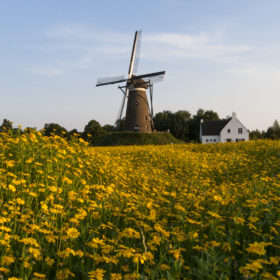
Netherlands’ Brabant Province supports community solar with €25.8 million
The money will be used to support a joint rooftop project developed by 12 municipalities in Southeast Brabant.
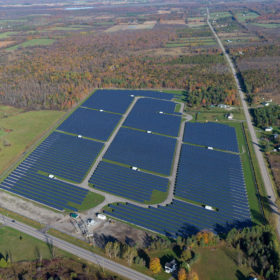
Renewables rising in Canada, but solar still sidelined — report
Renewable energy developers connected roughly 1.29 GW of new capacity to the Canadian grid in 2016, but solar remains a negligible part of that growth, accounting for just 0.5% of total nationwide electricity generation last year, according to the National Energy Board (NEB).
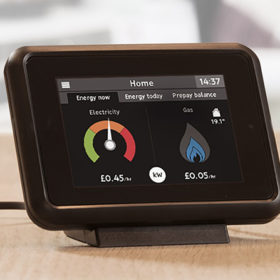
Shell snaps up British energy firm First Utility
Acquisition of the British company by Dutch-British oil giant Shell will support growth of First Utility’s smart energy solutions and aid incorporation of battery technology and renewables, company CFO says.

Belgium: Wallonian government confirms closing of residential PV incentive scheme
The energy minister of the Belgian French-speaking macro-region said that residential solar is now profitable without incentives in Belgium, and that no retroactive measures will be introduced.
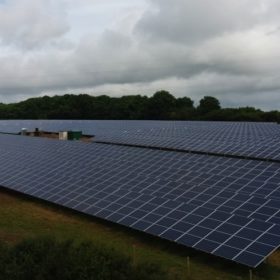
Troubleshooting efforts in PV plants: follow up Q&A from the recent pv magazine webinar
Troubleshooting in solar plants requires not only trying to find a diagnosis of why the performance ratio is reduced, but also to localize faulty modules. In a recent pv magazine webinar, experts discussed four troubleshooting cases and explored whether module-resolved monitoring would help reduce the effort, and thereby decrease LCOE.
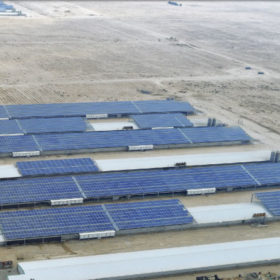
Israel to reintroduce FITs for rooftop PV up to 50 kW
A new scheme aimed at supporting all rooftop PV segments is expected to be launched soon by the government. The new mechanism includes net metering, although with an additional grid fee covering storage costs, and FITs for small-scale solar. The government is also planning new auctions for rooftop solar geared towards new models of entrepreneurship.

Argentina awards additional 259 MW of PV in third auction round
The developers of the five newly selected PV projects, which were initially excluded from the round, have agreed to reduce their prices to the levels of those selected in late November. The additional solar capacity has raised the total assigned power for PV up to 816.3 MW.
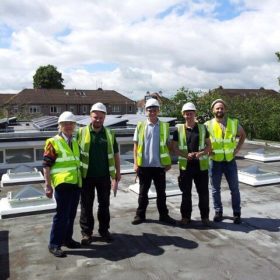
Scotland’s first energy strategy draws mixed feelings from solar industry
While solar has been recognized in Scotland’s first energy strategy, which aims to supply half of the country’s energy needs from renewables by 2030, criticism has been aimed at the lack of concrete policy frameworks for solar, an energy source that could add 6 GW capacity in the next 12 years.
