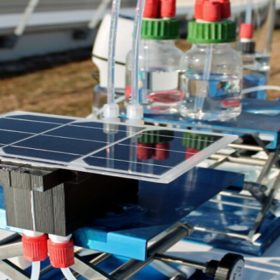
Different combinations of PV-powered electrolysers
An EU-funded research project coordinated by German research institute Helmholtz-Zentrum Berlin has tested several configurations for solar-powered hydrogen generation. First results showed which may be the most suitable PV technologies for electrolysis.
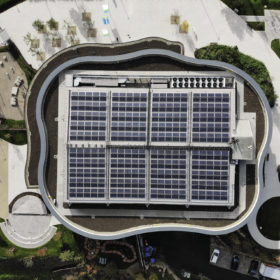
The weekend read: Hydrogen and the energy transition
Researchers are now simulating how the energy transition can be as successful and cost-effective as possible. As part of the simulation, they are also calculating how much hydrogen will be needed and where it could come from. In Germany, a recent study by Fraunhofer ISE showed that the cost is so low that the nation could gift itself the energy transition as a Christmas present.
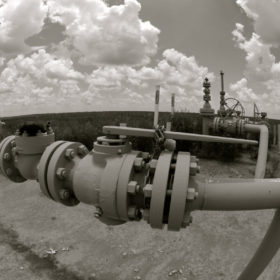
Global green hydrogen project pipeline reaches 50 GW
International thinktank IEEFA says there are 50 viable green hydrogen projects under development with an estimated renewable energy capacity of 50 GW and the potential to produce 4 million tonnes of the fuel annually.

Global daily round-up: Israel set to import solar power from Jordan and a hydrogen deal for South Holland
Plus, some 5 GW of solar could be heading to Botswana and Namibia and news of a new automotive fuel cell building in Ulm, Germany.
Daily news round-up: UK reveals details of next renewables auction, Iran’s first floating PV and more hydrogen
Taiwanese cell manufacturer Inventec Solar reportedly halted production this month and Ireland is preparing to remove rooftop solar panel restrictions, according to the Irish Independent.

Solar-powered hydrogen under $2/kg by 2030
Researchers from the Massachusetts Institute of Technology have identified sites where hydrogen could be produced via PV electrolysis at prices ranging from $1.90/kg to $4.20/kg in the United States by the end of the decade.
Japan’s struggle to drive down renewables costs
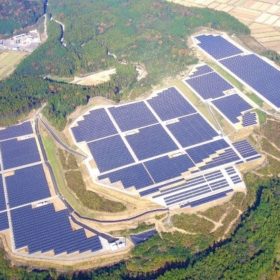
A nation famous for high electricity prices has seen power costs fall 15% this year, according to analyst Wood Mackenzie, a figure which will help attract $100 billion of solar and wind investment to 2030. Renewables will have to work even harder, however, to displace fossil fuels in hydrogen production.
Russian design for vanadium redox flow batteries
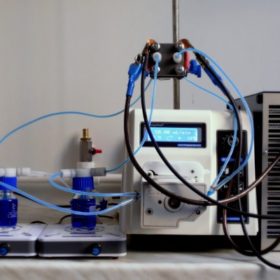
Researchers claim to have developed a cheaper, faster method of assembling the field flow plate layers of the membrane electrode assembly used in vanadium redox flow batteries, which they claim outperforms traditional components.
New membrane promises cheaper electrolysis
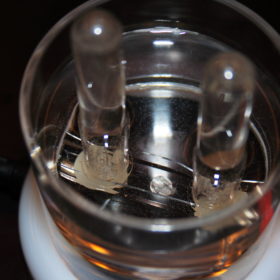
A novel anion exchange membrane has been developed by German chemical company Evonik. Its creators claim it can make hydrogen generation cheaper, as the cells used for electrolysis featuring the device would not require precious metals.
Toshiba’s power and heating hydrogen solution
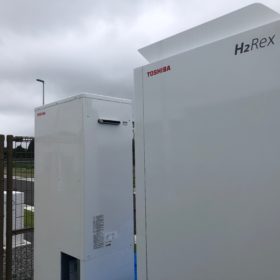
The Japanese electronics giant has deployed a 3.5 kW hydrogen fuel cell system for at its Michinoeki-Namie site in the Fukushima prefecture. The fuel will be provided by the company’s 10 MW Fukushima Hydrogen Energy Research Field nearby.
