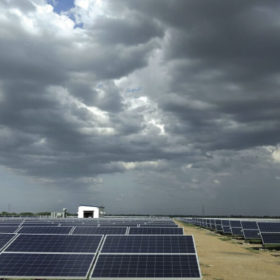
Japan’s Okinawa prefecture curtails solar generation for first time
Japan’s Okinawa Electric Power Co. has introduced PV curtailment measures in response to high solar radiation levels and low energy demand.
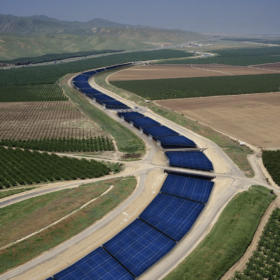
2022 review in trends: Applications (Part II)
The first part of this review covered solar-wind hybrid projects, offshore floating PV, and islandable microgrids. The second part covers trends in projects and applications.
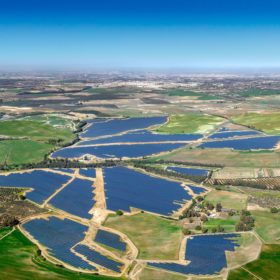
Global solar capacity additions hit 268 GW in 2022, says BNEF
BloombergNEF Analyst Jenny Chase says the world installed 268 GW of new solar capacity in 2022, with annual installations expected to hit 315 GW in 2023. In a recent interview with pv magazine, Chase pointed to a large backlog of delivered PV modules in Europe that still have yet to be installed.

Nepal kicks off tender for 100 MW of solar
The Nepal Electricity Authority (NEA) is seeking bids for solar projects with minimum capacities of 1 MW, for a total of 100 MW across 16 sites. Members of the country’s solar association are demanding higher power purchase agreement prices in order to participate in the tender.
Poland allocates 486 MW of solar in latest renewables auction
Poland’s Energy Regulatory Office has awarded 486 MW of solar in its latest renewables auction, which was largely unsubscribed. It allocated 150 MW for installations smaller than 1 MW, with a lowest bid of PLN 0.24477 ($0.056)/kWh, and 336 MW for larger installations, with a lowest bid of PLN 0.23677/kWh.

BIPV shading estimation methods key for uptake, says IEA-PVPS
A recently published report from the IEA-PVPS on building integrated photovoltaics (BIPV) digitalization found many BIPV professionals are unsure of a suitable method for estimating shading in BIPV projects.
Germany allocates 104 MW of rooftop solar in unsubscribed auction
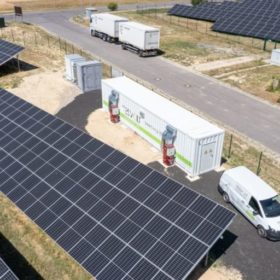
Germany’s latest solar auction allocated 104 MW of solar for buildings and noise barriers on motorways. The tender volume was 202 MW which went partly unsubscribed. The volume-weighted average award value fell slightly to €0.0874 ($0.093)/kWh.
Europe added 41.4 GW of new solar in 2022
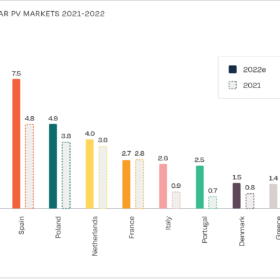
In another record year for solar, SolarPower Europe estimates PV in Europe grew by 47% in 2022, rising from 28.1 GW in 2021 to 41.4 GW this year. Germany installed the most with 7.9 GW, followed by Spain at 7.5 GW, and Poland at 4.9 GW. For the first time, the top 10 European solar markets all added at least 1 GW.

Slovenia set to install 258 MW of new solar in 2022
Slovenia’s cumulative PV capacity additions could grow from 466 MW in 2021 to 724 MW by the end of this year. The residential market will account for almost all new capacity, and demand is expected to grow under a net-metering scheme extension until the end of 2023.
Weekend Read: Can Lula deliver on Brazil’s solar hopes?
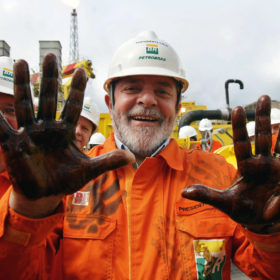
Brazil’s newly elected government, under Luiz Inácio “Lula” da Silva, will face energy-transition and decentralization issues during critically important years in the fight to curb climate change. Livia Neves reports from Rio de Janeiro.
