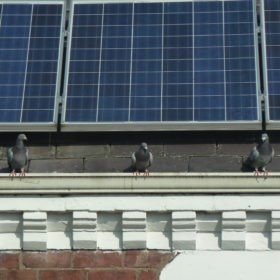
EU approves France’s new scheme for self-consumption
The European Commission has given the green light to €200 million in public support that will be provided by the French governmnet for approximately 490 MW of renewable energy capacity expected to be deployed under the self-consumption regime. The scheme will be based on technology-neutral tenders.
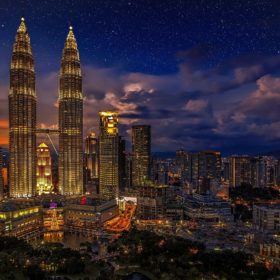
Large-scale projects, net metering and solar leasing for Malaysia
Minister announces new-year changes to try and drive further PV adoption in the populous southeast Asian nation.

Hanergy opens up with details of China’s new Great (Han)Wall
Thin-film manufacturer says its skyscraper product, which can be retrofitted, will open up a new BIPV marketplace – but spokesman sidesteps question of whether Trump’s solar duties will apply in the US.
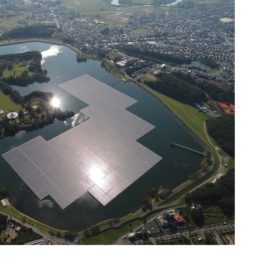
Belgium’s Flemish government makes first investment in floating PV
The Floating PV NV company has secured €2m for a floating solar plant on a site owned by Belgian raw material provider Sibelco. The funding is part of a €6m plan to support floating PV in Flanders.

Japanese utility KEPCO tests blockchain technology to determine value of surplus solar power
The power supplier is cooperating with the University of Tokyo, Mitsubishi UFJ Bank and Unisys, testing how solar power can be traded between solar prosumers and electricity consumers, while conducting transactions using a blockchain platform.
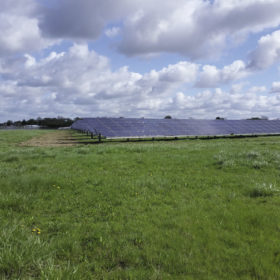
The weekend read: C&I challenges and innovations
In the jargon-heavy world of solar-speak, C&I handily condenses Commercial and Industrial into a snackable sub-section of the PV industry. But as sub-sections go, the C&I space has perhaps the greatest scope for flexibility, offering a raft of possibilities from ground-mount through to ingenious use of rooftop space. For module manufacturers, C&I also means something else: Challenges and Innovations, writes Ian Clover, Manager Corporate Communications, Hanwha Q Cells.
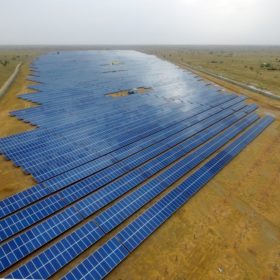
India to add up to 8.5 GW of RE in FY19
India is likely to add between 8-8.5 GW of renewable energy generation capacity in the current financial year ending March 2019, according to research and rating agency ICRA Limited.
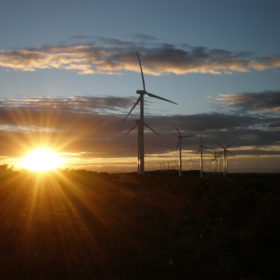
‘There is no alternative to a world of 100% renewables’
Electrifying the global energy system with clean energy is the only way to reach the targets set by the Paris agreement on climate change and avoid the catastrophic scenarios outlined by the recent IPCC report. In an interview with pv magazine, Christian Breyer – Professor of Solar Economy at Finland’s Lappeenranta University of Technology – explains a 100% renewables model is not only technically feasible, but also the cheapest and safest option. With solar and storage at its core, the future energy system envisaged by Breyer and his team will not only stop coal, but also nuclear and fossil gas, while seeing solar reach a share of around 70% of power consumption by 2050. By that time, PV technology could cost a third of its current price.
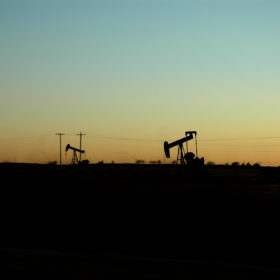
Ukraine’s Naftogaz begins investing in solar power
The nation’s oil and gas provider is building its first small-sized PV projects at facilities operated by Ukrtransgaz, the Ukrainian gas transport system.
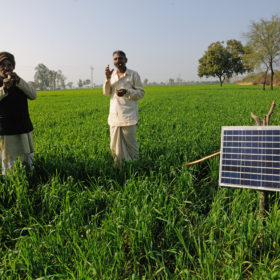
Rural India offers a $50bn opportunity for clean energy innovations
The farming sector alone offers a potential $40bn marketplace, thanks to rice transplanting, pesticide spraying and grain harvesting – says the Council on Energy, Environment and Water thinktank.
