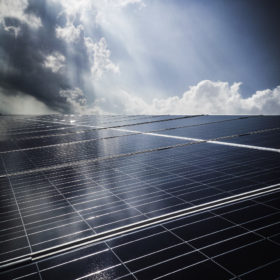
Philippine regulator opposes net metering expansion
The Philippines’ Energy Regulatory Commission (ERC) has said the removal of the 100 kW cap for solar installations under net metering would be difficult for the nation’s grid to accomodate. Meanwhile, a proposal to raise the threshhold is being discussed in the country’s Senate.

Canada to allow tax write-off for C&I renewable energy assets
The news came with Canada’s Fall Economic Statement. Through the new policy, the business case and access to finance will be improved to accelerate the adoption of renewable energy resources. This February, Canada proposed phasing out coal generation by 2030.
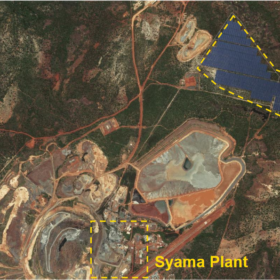
Mali gold mine to slash power bill with 40 MW solar hybrid plant
Australian mining company Resolute Mining has inked a JDA and PPA with Ignite Energy, to construct what it says is the world’s largest off-grid solar hybrid plant, at one of its gold mines in Mali.
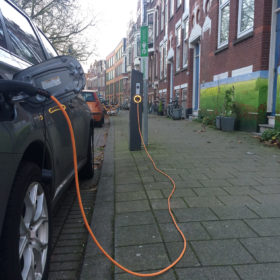
‘It’s time for politicians to deliver’
With COP24 climate change meeting looming, a German-led e-mobility and renewable energy alliance has signalled it is time for elected members to start delivering on carbon emission reductions before we pass the point of no return.
Solar, wind cheapest source of new generation in major economies – report
Solar and/or wind are said to be the cheapest source of new energy generation in all major economies, apart from Japan, finds BloombergNEF. It adds that China’s utility-scale PV market has contracted by over a third this year; and that battery costs are set to drop a further 66% by 2030, driven by EV adoption.

TfL thinks big with aim to install renewables across London estate
The local transport provider wants generation facilities – almost certainly solar – across its 6,000 acres of land and roofs in the capital city, and hopes to break ground on the first sites within a year.

Canada’s Alberta raises budget for solar rebates
The Canadian province will provide an additional CA$7.5 million for projects run by municipalities, while offering more advantageous conditions for businesses and non-profits.
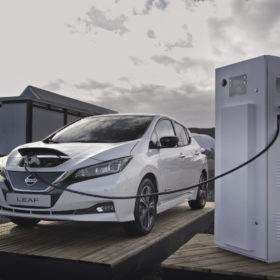
PV to take lion’s share of $120 billion annual investment
The impressive growth is unlikely to replace coal-fired power generation as it will only be sufficient to cover the predicted increase in demand for electricity. The electrification of heating, manufacturing and transportation offer room for further development.
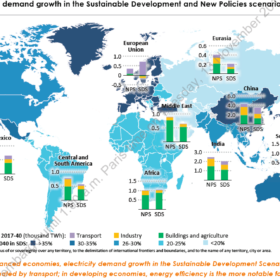
IEA World Energy Outlook: Solar PV capacity to overtake all but gas by 2040
Even in its low ball scenario, the International Energy Agency (IEA) imagines that installed solar PV capacity will overtake that of all other forms of energy apart from gas by 2040. Overall, it presents four scenarios in its 2018 World Energy Outlook, which show a changing energy landscape. While it finds that CO2 levels are, perversely, on the rise, and that many energy efforts in all but the most whimsical of its forecasts are far behind those needed to seriously address global warming, it still imagines coal, oil and gas playing a leading role in our energy mix going forward. It also sees “dramatic” transformation in the electricity sector. Long story short: Read something else if you want to take real climate action. We suggest The Drawdown.
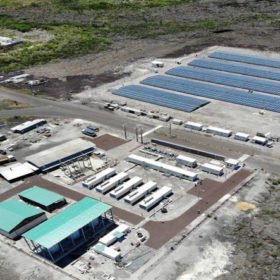
Ecuador introduces net metering for solar up to 500 kW
The new rules will enable the microgeneration from solar power generators up to 300 kW for residential users, and 500 kW for industrial users.
