
Ramaphosa offers optimism for South African solar
Although lobbyists will be dismayed a 1 GW annual cap on PV will remain, the indications are it will disappear after 2030 – if not before – and renewables appear to have become a more attractive proposition than nuclear, as coal is phased out.
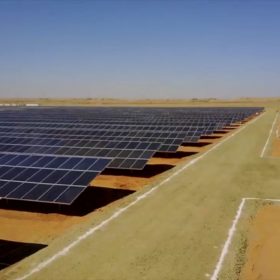
More developers approved for Egyptian small scale PV program
National scheme reportedly aims to drive installation in segments including residential and commercial and industrial facilities.

The weekend read: The new Dutch climate proposal unpacked
The Netherlands, second-last in the EU when it comes to the production of renewable energy, presented its first draft of the Dutch Climate Agreement. This agreement is drafted to set out targets and policies across sectors such that the country adheres to the previously proposed Climate Act. When both are signed, writes Rolf Heynen, director of Good! New Energy, the Netherlands will be only the seventh country worldwide with such an act – and on paper one of the most ambitious. What will this mean for solar energy?

Romania launches rebate scheme to support solar under net metering
The rebate mechanism may cover up to 90% of the costs for buying and installing a rooftop PV system, but grants may not exceed 20,000 RON (around US$4,800). The scheme is intended to support the development of net metered residential solar projects.

Promises of more friction, less ballast on flat roofs – follow up Q&A from K2 webinar
In a recent pv magazine webinar, K2 Systems presented two new developments designed for solar PV systems on flat roofs, which promise a higher coefficient of friction and good thermal cycling, among other benefits. Here are the questions we didn’t have time to answer.
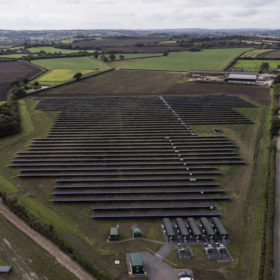
First utility-scale battery helps relieve stress on UK’s national grid
A 10 MW system in Derbyshire provided power to the grid as part of a virtual power plant in a national first. It should prove a popular development, according to the results of a new survey.
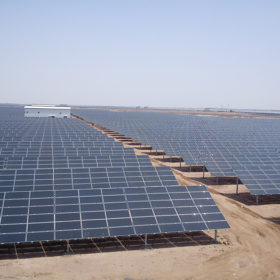
India set to add almost 60 GW of new solar by 2023
A combination of national, state and public body commitments could see the amount of PV added nationally treble on the last four-year period. But even with a new 7-8 GW added, rooftop solar will still be bringing up the rear.
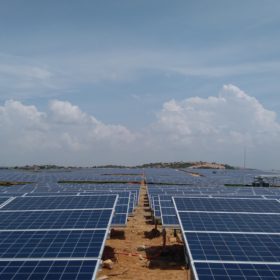
India’s cumulative grid connected solar capacity reaches 22 GW
According to the latest figures from the MNRE, cumulative grid-connected ground-mounted solar PV capacity has reached 22 GW in India, with 1.3 GW connected between this April to July. Module prices, meanwhile, are said to have come down “considerably”.

Brazil’s PV capacity tops 1.6 GW
At the end of June 2018, according to official statistics, large-scale solar capacity reached 1,307 MW, while the share of distributed PV generation (up to 5 MW), was 296 MW. Of the total capacity, 1.36 GW was connected to the grid in the last 12 months.
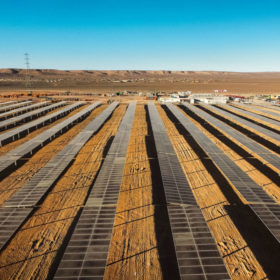
Peru introduces net metering, new DG rules for RE up to 10 MW
The Peruvian Government has submitted to public consultation the draft of Supreme Decree for the regulation of distributed generation (DG), which is the secondary legislation necessary to implement the DG law first promulgated in 2015. Talking to pv magazine, the president of the Society of Peruvian Renewable Energy explains how the new rules will not only introduce a net-billing scheme for installations up to 200 kW, but also a scheme for projects up to 10 MW, which is very similar to the so-called Pequeños Distributed Generation Media (PMGD) program in Chile.
