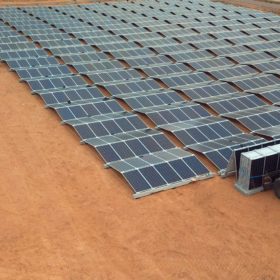
Modular solar tech gets nod for Australian off-grid lithium mine project
Australian modular solar manufacturer 5B’s rapidly deployable Maverick technology is set for installation at a 95 MW hybrid power plant in Western Australia featuring solar, wind, and battery energy storage.

Construction begins on 23 MW solar plant in Gambia
Gambia National Water and Electric Co. (Nawec) says the World Bank and the European Investment Bank (EIB) have agreed to finance a 23 MW solar plant in the African nation.
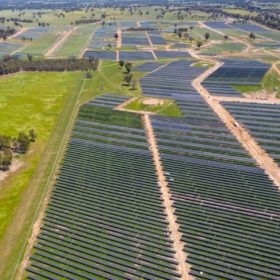
Agrivoltaic project set to become New Zealand’s first utility-scale solar farm
New Zealand government-owned Genesis Energy and renewables partner FRV Australia have purchased an advanced 52 MW agrivoltaic solar project on New Zealand’s South Island. If the project meets its 2024 operational target as anticipated, it will be the country’s first utility-scale solar farm.
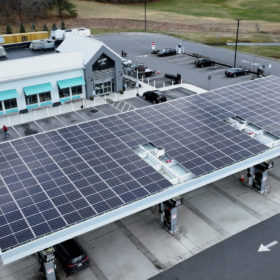
Growing US microgrid market hits 10 GW in 2022
Wood Mackenzie estimates that the US microgrid market has seen a 47% increase in solar and storage capacity in 2022 compared to 2017 levels, driven by rising demand for uninterrupted services, military resilience plans, and corporate environmental, social, and corporate governance (ESG) goals.
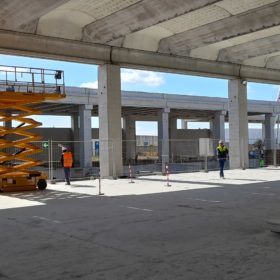
Enel announces potential partner for 3 GW solar module factory in Italy
Enel CEO Francesco Starace says the company is talking to an unspecified international investor about the sale of a 50% stake in its new 3 GW heterojunction solar module factory in Catania, which is scheduled to start operations in September.
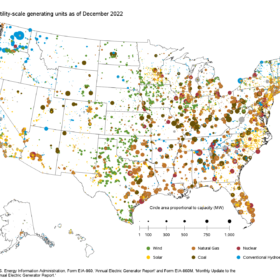
US to add 29.1 GW of large-scale solar in 2023
The US solar market is set to add 29.1 GW of new utility-scale PV and 9.4 GW of storage in 2023, according to the US Energy Information Administration (EIA). If that new capacity goes online as planned, 2023 will have the most new utility-scale PV capacity added in a single year.
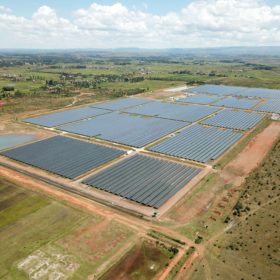
Financial close for 20 MW of PV, 5 MWh of storage in Madagascar
Axian has secured MGA 47.1 billion ($10.9 million) to finance a 40 MW solar plant and a 5 MWh storage facility in Madagascar. The installation is the island state’s largest solar park.
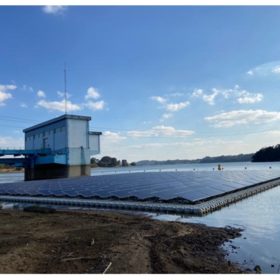
Floating PV reduces water evaporation in Brazilian reservoir by 60%
Brazilian and US researchers have evaluated the water evaporation rate of a floating PV system on a Brazilian reservoir. They said that the 130 kW installation reduced evaporation by 60%, and claimed that a 5 MW system could save enough water for 196 people per year.
Argentina launches tender for 500 MW of solar
Argentina has announced its first renewable energy tender since 2019.
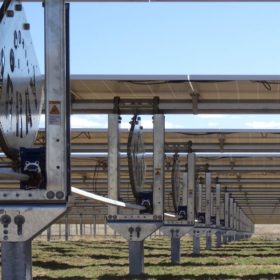
Array Technologies to build tracker factory in Australia
US solar tracker supplier Array Technologies plans to set up a factory in Australia, after winning a contract to supply trackers for a 102 MW solar farm in the Australian state of Victoria.
