
Simultaneous optimization of plant design and control unlocks cost-competitive green hydrogen
Achieving cost-competitiveness for green hydrogen produced via water electrolysis using intermittent renewable energy sources remains a significant challenge. Researchers from LUT University in Finland have shown that considerable cost reductions can be achieved by simultaneously optimizing plant control and design, based on specific hydrogen demand targets and local weather conditions.

Irish solar records new monthly solar generation peak for May
Grid-scale solar accounted for 6.5% of electricity generated in May, with Ireland’s transmission system operator (TSO) EirGrid recording 173,163 MWh of solar output. Meanwhile, regulators are working to streamline the grid connection application process, a move welcomed by the solar industry.
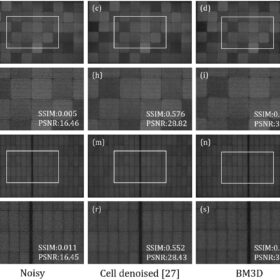
Denoising outdoor electroluminescence images of PV panels through deep learning
Researchers in Australia have developed a simplified residual network-based architecture method to filter out noise from electroluminescence images of PV modules. The proposed technique reportedly enhance the accuracy and efficiency of automated inspection systems for utility-scale PV plants.
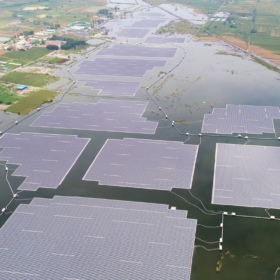
Water-based photovoltaics reach global capacity of 21.18 GW
An international research team has developed an index-based remote sensing method to see trends in the global development of water-based PV. It has found that China currently accounts for 80% of the global total deployed capacity.
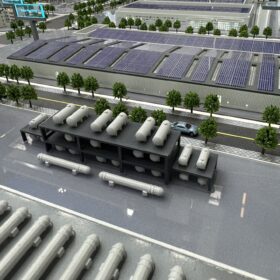
Cost optimization and competitiveness in green hydrogen: Critical factors and determining variables
Through a rigorous approach, with more than 4,000 simulations and a detailed analysis of each scenario, Enertis Applus+ offers a roadmap for understanding where, how, and under what conditions green hydrogen can be produced at competitive costs.
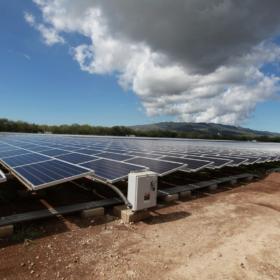
US solar developers secure over $1 billion for 1.4 GW of projects
US solar developers Soltage, Origis Energy, and rPlus Energies have secured more than $1 billion in financing across three major deals, signaling sustained investor confidence in utility-scale solar and storage despite US policy uncertainty. The transactions back more than 1.4 GW of solar and 1.8 GWh of battery capacity.

Hail risk remains top issue faced by solar projects
Hail damage remains a top risk to large-scale solar assets, according to an annual report from kWh Analytics.

Lightsource BP secures financing for 115 MWp fishery solar project in Taiwan
Financial package announcement coincides with groundbreaking ceremony for Project Budai in Chiayi County, Taiwan. The 115 MWp project is expected to be complete in 2026, according to Lightsource BP.
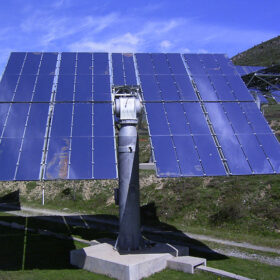
CSP-driven multigeneration system combines hydrogen generation with compressed air, pumped hydro storage
Researchers have designed a novel multigeneration energy system that provides five outputs, namely electricity, hydrogen, cooling, heating, and hot water. The system is mainly powered by a solar heliostat system and incorporates compressed air and pumped hydro storage technologies for storing surplus power.

Liquid insulation for sustainable transformers
Liquid insulation is one of the ways of ensuring transformers – which convert electric power from high voltages to lower voltages – remain safe. Mineral oil, however, has been the main insulating liquid in industrial power systems to date and sustanaible alternatives are strongly needed.
