
Interview: Is Russia’s embrace of renewable energy a reality or a myth?
The superpower has always been seen as a fortress for oil and gas but positive signs are emerging from its renewable energy sector.

Guatemala launches tender for 110 MW solar project
The plant, for which no official documents are available online, is being opposed by the nation’s Committee of Agricultural, Commercial, Industrial and Financial Associations which claims it is against the interest of its promoter, utility INDE.

Lukewarm response as Indian state of Gujarat re-tenders 700 MW of PV
A reduction in solar park charges was not enough to attract developers in the same numbers that flocked to a separate, 500 MW exercise two months earlier. The Raghanesda Solar Park continues to be a headache after a previous procurement was cancelled because the tariffs were deemed too costly.
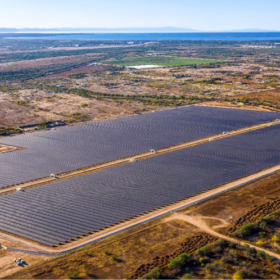
Region’s first utility scale solar-plus-storage project comes online in Mexico
Located in the town of La Paz, in Baja California Sur, the Aura Solar III plant has a generation capacity of 32 MW and includes a lithium-ion battery storage system with a capacity of 10.5 MW/7.0 MWh.
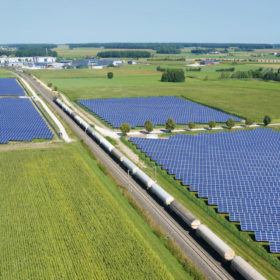
Germany added 350 MW of new solar capacity in March
The strong growth registered in the first quarter of the year – when 1.27 GW of new PV was deployed – will prompt a 1.4% reduction in the FIT price for the three-month period up to July.

China confirms FIT level payments – but they will be ‘subject to competition’
The Beijing authorities have confirmed the payment levels to be made according to type of project and region from July onwards but an auction process will be involved so the figures are for guidance only. No decision has yet been made on the 30 GW of capacity added since the end of May.
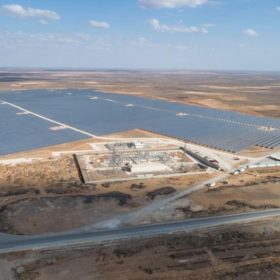
Fotowatio starts commercial operations at latest Jordan project
The Saudi-owned developer has announced an ambition to have installed 5.8 GW of renewables capacity by 2024 and took a small step in that direction with its 66.7 MW Al Safawi Solar Plant.
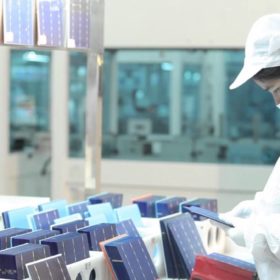
Jinko announces 5 GW wafer factory and 10.7 GW of module supply deals
The new manufacturing facility will be located in Leshan, in China’s Sichuan province and will produce monocrystalline wafers. It will raise the group’s wafer capacity to around 11.5 GW. Meanwhile, large supply deals are said to have come from markets including Vietnam, Mexico and Spain.
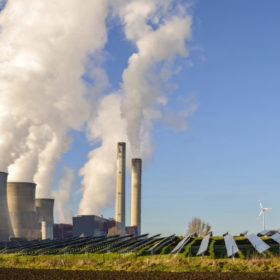
Renewable energy will surpass coal in the US this month and next
The volume of U.S. electricity generated by renewable energy is set to surpass the level sourced from coal for the first time this month and the trend is expected to continue in May, according to Department of Energy data.
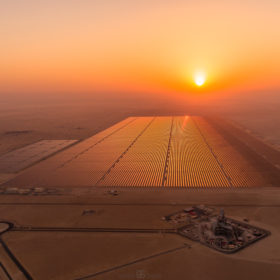
ACWA Power and Shanghai Electric deepen Belt and Road commitment
The two power companies, who worked together on the 700 MW concentrating solar power phase of the Mohammed bin Rashid Al Maktoum Solar Park, have reportedly agreed to develop power generation and desalination projects along the route of China’s new Silk Road.
