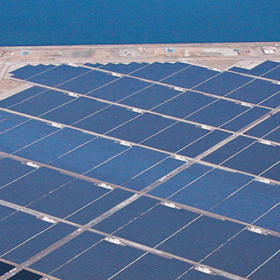
Toshiba posts $439.5 million H1 loss as solar ops struggle
Toshiba has posted a group net loss of JPY 49.8 billion ($439.5 million) for the first half of the current Japanese fiscal year, but the bleak outlook for its solar operations is the least of its concerns, as it struggles to cover losses from its bankrupt U.S. nuclear business and avoid being delisted from the Tokyo Stock Exchange (TSE).

Azure Power Announces Results for Fiscal Second Quarter 2018
As of September 30, 2017, Azure power has 1,381 MW operating & committed, an increase of 35% over September end 2016. Revenue for the second quarter was INR 1,823.8 million ($27.9 million), an increase of 104% over the quarter ended September 30, 2016. The company’s adjusted EBITDA for the quarter was INR 1,499.5 million (US$23.0 million), an increase of approximately 167% over the fiscal second quarter 2017.
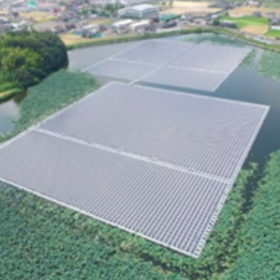
Mitsubishi Electric completes 2.6 MW floating plant
Mitsubishi Electric and Tokyo-based Sumitomo Mitsui Construction have finished building a 2.6 MW floating solar plant on a pond in western Japan.
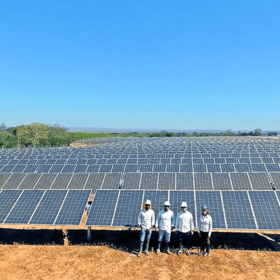
EDF & Canadian Solar connect 284 MW in Brazil
Canadian Solar Inc, and EDF Energies Nouvelles have announced that their 191.5 MWp Pirapora I and Pirapora III 92.5 MWp solar energy plants in brazil, totalling 284 MW were connected to the grid in November 2017.
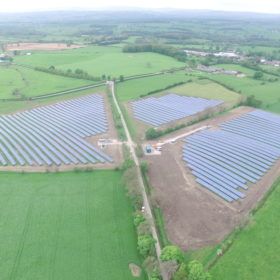
Developers propose 350 MW PV+storage project in UK
A joint venture between leading solar developers Wirsol and Hive Energy has launched a proposal for a solar park ‘in excess of 350 MW’ to be located on Britain’s North Kent Coast. While the proposal is in its initial stages, the developers state that the project will be built without any subsidies.
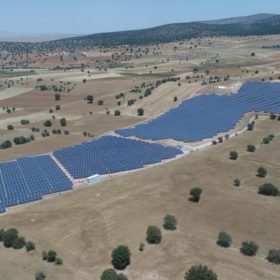
juwi commissions 19.7 MW of unlicensed solar projects in Turkey
The German solar developer and EPC has switched on 19.7 MW of combined solar PV capacity in Turkey, developed as two separate projects at three locations.
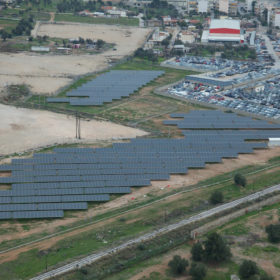
Greece installs its first large-scale solar under new, auction-based scheme
Greece has installed 8.6 MW of new large-scale solar PV capacity under its new policy framework. These are the first large-scale solar PV installations in the country since 2015.
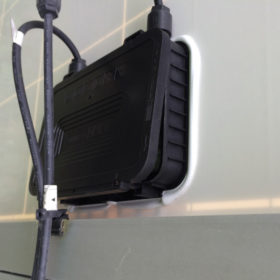
What happens when… bypass diodes fail?
Series troubleshooting: Bypass diodes fail regularly, either because they do not have a high enough power rating or because they are overloaded due to nearby lightning strikes. With the following hypothetical, but realistic case pv magazine starts a series which aims to make the estimation of troubleshooting efforts more concrete and to stimulate a discussion on todays troubleshooting efficiency.
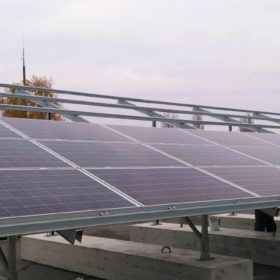
Construction underway on first PV array for Chernobyl
Project developer Rodina today announced that construction is underway on the first solar power plant to be built on land inside the Chernobyl exclusion zone.
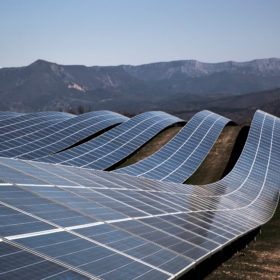
Siemens to equip 140 MW projects in Brazil, Pakistan
The German technology firm has bagged orders for the turnkey electrical equipment and installation of two solar farms in Brazil and Pakistan. In addition, it announced the end of its cooperation with German inverter specialist SMA by the year’s end, and plans to manufacture its own inverters.
