
Building perovskite solar cells with waste toner carbon
Scientists in China have fabricated 11.78%-efficient fully printable perovskite solar cells by using an electrode made of waste toner carbon from printer cartridges. The cell achieved an open-circuit voltage of 0.88 V, a short-circuit current density of 24.64 mA cm, and a fill factor of 54.56%.
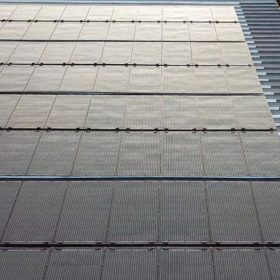
CIGS solar panels for weight-constrained rooftops
U.S. thin-film module manufacturer Sunflare is ramping up production at its factory in China. The company makes four different CIGS modules.
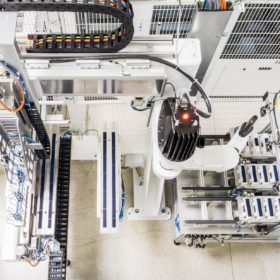
New ‘matrix’ layout for shingled solar cells
German equipment supplier M10 and research institute Fraunhofer ISE will unveil a new prototype stringer for shingled module layouts at the Intersolar Europe trade show later this week. Employing an offset layout for the shingles, the approach promises a relative efficiency gain of up to 6%, compared to a conventional half-cell module.
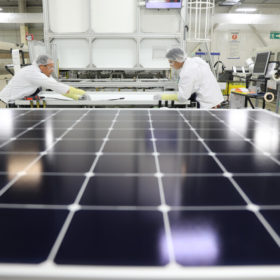
PV industry veteran warns of looming supply chain disruptions in Australia
Australia’s PV module supply landscape could experience a supply shock as legislation emerges to stamp out the use of forced labor. Chris O’Brien, VP for the APAC region at Maxeon Solar Technologies, says that measures that have left modules stranded at the U.S. border could very well occur in Australia soon.

European Commission hints at solar module carbon footprint standards
A consultation process examining whether legislation is required to ensure the eco credentials of panels and inverters is focusing on eco-design and energy labeling but has also made mention of the need for less carbon intensive manufacturing.
New discovery could make organic PV competitive with crystalline silicon
A group of international researchers has observed how non-radiative charge recombination occurs in organic PV and claims to have identified a potential solution that could bring this solar tech closer to crystalline silicon in terms of power conversion efficiency.

Silicon metal and aluminum industries hit by China power shortages
A combination of booming demand for coal-fired power and a shortage of the black stuff – exacerbated by a political row with Australia – have forced up prices to the extent fossil fuel generators are making a loss on every unit of electricity they produce. pv magazine‘s Vincent Shaw considers the potential solutions.
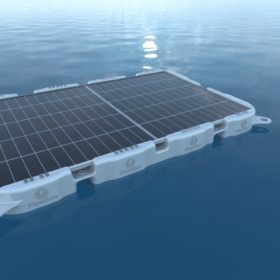
New mounting structure for floating PV
The float can host conventional solar modules with a 120-cell design, a power output of over 400 W, and a weight not exceeding 30kg. It is being developed by South Africa-based Phelan Energy Group, in Dubai.
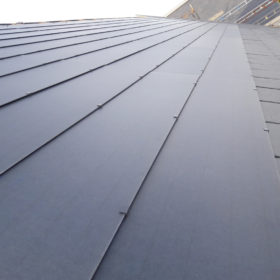
Solar tile with 14.2% efficiency from Denmark
Dansk Solenergi ApS has developed a 13.6 kg tile that can be used for both new buildings and building renovation. The device is currently being produced in Denmark, where the company operates a 40 MW line.
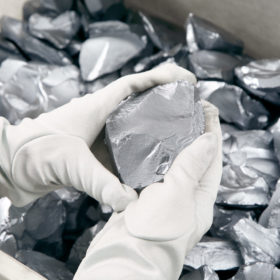
Chinese PV Industry Brief: Rising polysilicon prices, new 5 GW HJT cell factory
Wind power specialist Mingyang Smart Energy has revealed plans to build a 5 GW heterojunction module factory in China’s Jiangsu province, while TBEA has said it intends to raise its majority stake in Xinte Energy from 62% to 67%.
