
‘Bigger is not always better’
Chinese monocrystalline PV module manufacturer Longi has yet to join the race to produce solar panels with power outputs above 600 W. The decision is line with a clear strategy, a company spokesperson told pv magazine. Outstanding issues for these moduels, according to the manufacturer, include low cell manufacturing yield, system compatibility, concerns about module transport, and hotspot-related failure risks, as well as the need for mechanical loading tests.
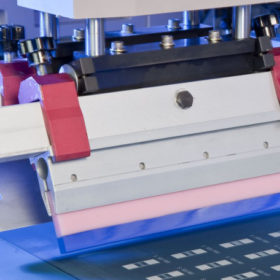
Slimming down on silver
Using an innovative high-speed video setup, scientists in Germany were able to observe the screen-printing process used in solar cell metallization, on a time scale of less than 50 milliseconds. Insights into the paste’s behavior and the mechanisms at work during screen printing will improve the process and the formulation of the silver paste it relies on.

Centrotec becomes largest shareholder of Sonnenstromfabrik
Centrotec, a German energy efficiency specialist, has acquired Switzerland’s Pari Group, which holds an 80% stake in German PV module manufacturer Sonnenstromfabrik.

Covid-19 weekly round-up: Dormant MiaSole claims Covid support in the US as Indian new solar figures slumped
Plus, analyst WoodMac says a fall in the cost of power generation in Japan during the public health crisis will help drive renewables investment and the Indian government has relaxed borrowing rules for its financially crippled electric utilities.
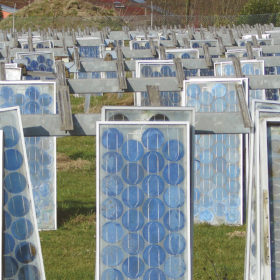
Recycling PV panels: Why can’t we hit 100%?
In February, non-profit EU solar panel recycling body PV Cycle announced it had collected 5,000 tons of modules in France, of which 94.7% could be recycled. A reader asked us about the remaining 5.3% and here, PV Cycle’s communications manager, Bertrand Lempkowicz, responds.
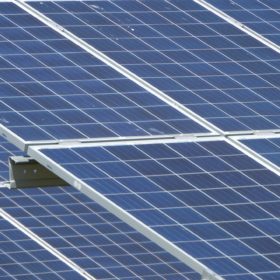
Chinese PV Industry Brief: New supply deal for Daqo plus more cell and PV glass production capacity
Chinese polysilicon manufacturer Daqo has secured a long-term supply agreement with PV equipment provider and monocrystalline wafer manufacturer Wuxi Shangji Automation, Shanxi Coal International Energy Group has unveiled a plan to set up a 10 GW heterojunction solar cell production fab and Longi has held its wafer prices.
Daily news round-up: UK reveals details of next renewables auction, Iran’s first floating PV and more hydrogen
Taiwanese cell manufacturer Inventec Solar reportedly halted production this month and Ireland is preparing to remove rooftop solar panel restrictions, according to the Irish Independent.
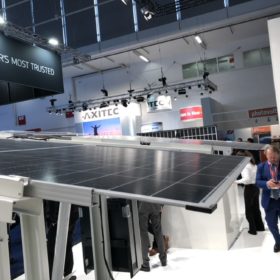
Manufacturing process for mono cast solar cell exceeding 23% efficiency
Trina Solar has made a PV cell by directly applying the unmodified i-TOPCon process, originally developed for Cz mono wafers, to cast n-type quasi-mono silicon wafers. It claims the average efficiency, tested in-house with a calibrated reference cell, is 22.98%.
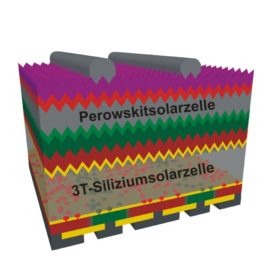
German-led consortium aims for 33% efficient perovskite-silicon solar cell
The Institute for Solar Energy Research Hamelin (ISFH), the Karlsruhe Institute of Technology (KIT) and the Institute for Materials and Components in Electronics at the University of Hannover, as well as Centrotherm, Singulus, Meyer Burger and Von Ardenne are involved in a research project aimed at achieving a 27% conversion efficiency for silicon solar cells based on perovskite.
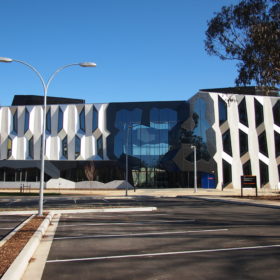
Degradation and regeneration in polysilicon passivation layers
Scientists in Australia took a close look at the long-term performance of passivation layers in silicon solar cells, and discovered a surprising process of degradation and regeneration at work within the material. The results could have implications on the processes used in industrial scale solar cell production.
