Chinese PV Industry Brief: new listing plans and more POE encapsulant capacity
Daqo revealed it will list its main production unit in Shanghai, while Goodwe secured approval for its own plans to list shares. Cybrid Technologies, meanwhile, said it will ramp up production of polyolefin elastomer (POE) encapsulant films.
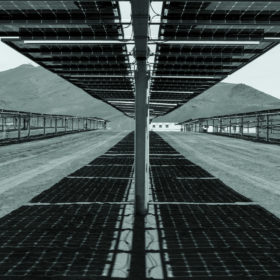
Single-axis bifacial PV offers lowest LCOE in 93.1% of world’s land area
Researchers from the Solar Energy Research Institute of Singapore have concluded that utility-scale PV projects relying on bifacial panels and single-axis trackers deliver the lowest levelized cost of energy in most of the world. They found that the combination of bifacial products with dual-axis trackers is still too expensive, despite the higher yield. The second-lowest LCOE is offered by monofacial single-axis tracker plants.
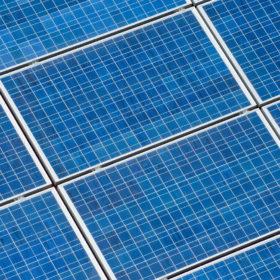
Game theory for solar module manufacturing
Researchers in Iran have applied the Stackelberg leadership model to determine whether the creation of a closed-loop solar module supply chain – including panel refurbishing – is feasible. According to their findings, a similar supply chain may only be set up with public subsidies, which would ensure that costs for R&D, module production, and recycling are distributed between the government and all the chain’s players.
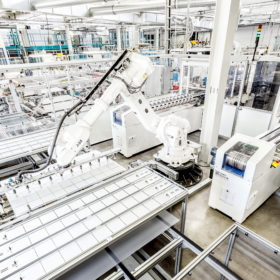
teamtechnik receives stringer order for 400 MW German fab
German equipment manufacturer teamtechnik announced it has received an order from a European module manufacturer for several stringers to process nine busbar half cells. Already a major trend among module makers in China, 9BB technology now looks to be headed further afield.
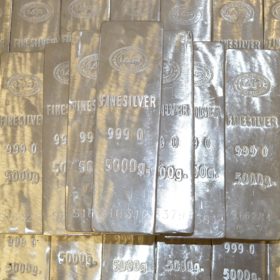
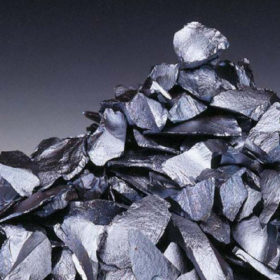
Silver demand for PV manufacturing may have peaked in 2019
A Silver Institute study says demand for the precious metal for solar manufacturing accounted for 11% of global consumption last year but reduced solar generation capacity up to 2023 will eat into that figure and ‘thrifting’ technological advances will kick in after that point.

US trade commission dismisses Hanwha patent infringement claim
The Chinese manufacturer this morning said the International Trade Commission had agreed with the initial determination issued by an administrative law judge in April, that Jinko and peers Longi Solar and REC Group had not infringed Hanwha’s solar cell passivation technology.
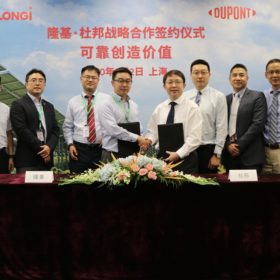
Longi and DuPont expand collaboration on product innovation
The companies aim to jointly develop higher quality and more competitive cells and modules that will in turn ensure the viability of PV power plants.
Covid-19 weekly round-up: It is still unclear how the crisis will play out on various solar segments, although one US installer says business has never been better…
Module price falls driven by the energy demand slump and Chinese oversupply may reverse at the end of the year, Germany appears immune to the Covid rooftop curse and emergency funding has been offered up to EU businesses affected by the crisis.

Assessing the soiling mitigation properties of anti-reflective coatings
Researchers in China have sought to understand how soiling exacerbated by anti-reflective coatings might inhibit solar panel output. In terms of effectiveness against soiling, the scientists found hollow-silica-nanoparticle coatings did better than solid silica alternatives.
Solar costs have fallen 82% since 2010
The levelized cost of energy generated by large scale solar plants is around $0.068/kWh, compared to $0.378 ten years ago and the price fell 13.1% between 2018 and last year alone, according to figures released by the International Renewable Energy Agency.
