
Analyst expects recovery for PV and storage supply chains
U.S.-owned analyst Wood Mackenzie expects solar demand to decline but predicts the market will recover, with the prospects for the energy transition remaining intact.
Poly maker pulls out of wafer JV with semiconductor company
GCL-Poly has pulled its commitment to inject US$68m into a 30 GW production capacity wafer fab joint venture established with Tianjin Zhonghuan in the Chinese autonomous region of Inner Mongolia, citing a preference to focus on ‘more competitive products’.
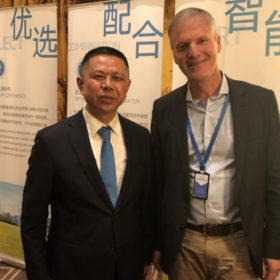
Trina to re-list on Shanghai Stock Exchange
The Jiangsu-based PV manufacturer follows peer JA Solar in de-listing in the U.S. to return to its homeland. The board will hope to gain access to more funding as a result, and will also face less public scrutiny.

New fractal solar panels combine efficiency and aesthetics
Researchers from the United States have proposed a new electrode design for fractal solar panels that combines the typical aesthetic advantages of the technology with the efficiency of busbar design. The proposed pattern is based on the fractal tree structure known as H tree, or T-branching, which is a geometric shape consisting of a repeating pattern that resembles the letter H. The hybrid H-tree/busbar pattern showed power losses that are close to those of standard busbars.

Shunfeng halts trading ahead of 540 MW project capacity sale
The planned disposal of more than a third of the Chinese solar company’s project portfolio would take a significant chunk out of its debt mountain but trading in company stock was halted this morning, pending an announcement in relation to the project sale. Shunfeng sold off German PV project monitoring business meteocontrol to another operation owned by its main shareholder at the end of last year.

Finnish solar manufacturer extends vital fundraising exercise again
Valoe Corporation has extended its €3.5m convertible bonds issuance but with investors fleeing to safe havens and Lithuania yesterday announcing COVID-19 quarantine measures, hopes of getting cell manufacturing off the ground in Vilnius this month appear unrealistic.
Talesun to bet big on advanced technologies
Chinese solar manufacturer Talesun has announced plans to raise up to $226 million to expand PV cell and module production capacity by up to 2 GW, with a focus on heterojunction and TOPCon technologies.

The weekend read: Covid-19 disrupts
A viral outbreak in the city of Wuhan, in China’s Hubei province, has become a nationwide health crisis with global implications. And with PV manufacturing concentrated in China, there are serious implications for all corners of the solar world, reports Vincent Shaw in Shanghai.
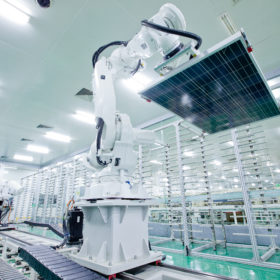
Jinko profits surge in 2019
The Chinese manufacturer shipped 14.3 GW of PV modules last year, up 2.9 GW from 2018. In its 2020 outlook, it reiterated its initial shipment guidance and confirmed its plans to ramp up capacity.

New technique to improve titanium dioxide films in dye‐sensitized solar cells
Dutch scientists are producing mesoporous titanium dioxide thin films at room temperature by using the papain enzyme in a dip‐coating procedure. This fully organic process could facilitate the development of cheaper, more efficient dye‐sensitized solar cells.
