
GCL wants a 1 GW perovskite cell production line in place by 2022
With the Chinese manufacturer claiming it has already hit 16% conversion efficiency on a large panel, a recent perovskite conference heard predictions the technology will make up the next generation of PV cells – provided it avoids the pitfalls experienced by thin-film devices.

Belt and Road to bring 1 GW of solar to Italy
Chinese state-owned PV manufacturer Jetion Solar says it has signed a deal with Italian government-owned oil and gas major Eni to develop a slew of new solar projects across five regions in the next three years in a deal worth €2 billion.
How will China’s electricity price reform affect solar?
The nation’s plan for grid-parity solar – brought forward to ease a mounting public PV subsidy debt burden – could be left in ruins by a newly-announced scheme to part liberalize the electricity price, itself motivated by a need to bail out financially stricken state-owned power companies.
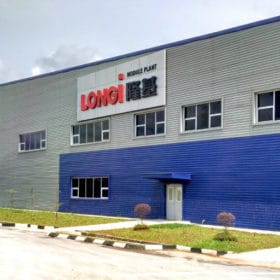
Longi unveils results of bifacial module test
The exercise, conducted on Longi PERC bifacial modules by Germany’s TÜV SÜD at a test field in China, showed surprisingly higher gains in panels getting light reflection from painted-surface and grassland albedo. It also showed, Longi claimed, bifacial panels operate at lower temperatures than single-sided alternatives.
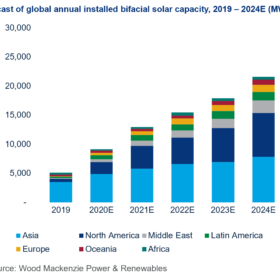
WoodMac: Bifacial module capacity will exceed 21 GW by 2024
Increasingly affordable and free from the Trump administration’s solar tariffs, bifacial modules are only set to get more popular in the years ahead. In its first report on bifacial PV, WoodMac predicted the technology will make up 17% of global installations five years hence, quadrupling the share it will have this year.

The ballooning potential of curved solar cells
Researchers in the U.S. claim to have developed a manufacturing process based on the use of a latex balloon that could lead to the production of more efficient curved electronic devices, including hemispherical solar cells.
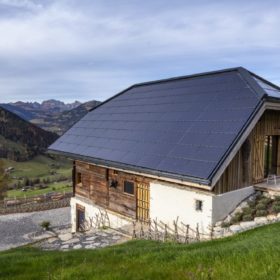
Bigging UP the carbon-free pioneers: Step forward 3S Solar Plus
pv magazine’s UP campaign aims to highlight industry movers who embrace carbon reduction and the circular economy in their operations and Swiss BIPV manufacturer 3S Solar Plus boasts an impressive sustainability record.
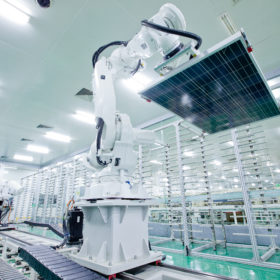
Jinko ships 300 MW for project in southern Spain
The Chinese module manufacturer has provided Cheetah panels for the Talasol project in the municipality of Talaván, near Cáceres in the southern Spanish region of Extremadura.
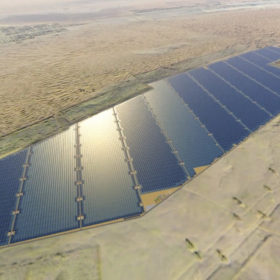
Jinko becomes first solar manufacturer to make 100% renewable energy pledge
The Chinese module giant has committed to sourcing 70% of its energy from renewables by 2023 and all of it by 2025. If serious, that could represent confidence in the amount of new renewable energy generation capacity to come online in China given the company’s huge production capacity expansion plans.
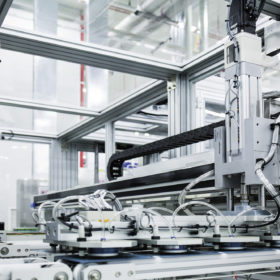
Hanwha Q Cells opens largest solar factory in the Western Hemisphere
The 300,000 sq ft factory in Dalton, Georgia has the capacity to produce 12,000 PV modules per day – 1.7 GW worth annually for panels able to produce the same peak generating capacity as the Hoover Dam.
