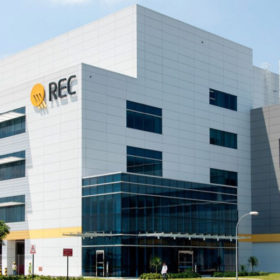
Joining the high-efficiency gang
In a conversation with pv magazine, REC vice-president for sales in the EMEA region Ivano Zanni describes the new strategy of the Norwegian manufacturer following the launch of its high-efficiency, half-cut mono n-type heterojunction module. REC expects annual production capacity for the panels at its factory in Singapore to increase to 600 MW by the end of next year, and that the company’s total capacity will reach 2 GW.
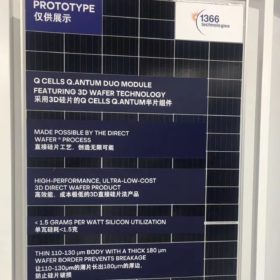
Prototype modules featuring ‘3D wafers’ on show at SNEC
New modules incorporating American company 1366 Technologies’ 3D direct wafers were unveiled yesterday at the SNEC trade show in Shanghai. The prototype modules are produced by Korean manufacturer Hanwha Q Cells. The two companies have a strategic partnership going back several years, and are ramping up a wafer factory near Q Cells’ module facilities in Malaysia.
Canadian Solar bags 500 MW panel order from Spain
The modules will be used by U.K. developer Solarcentury for its Cabrera and Talayuela Solar projects in southern Spain.
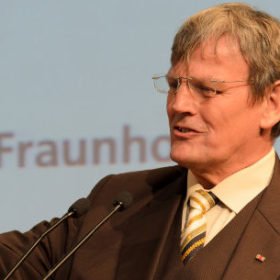
European Solar Manufacturing Council chooses Eicke Weber as chairman
The former director of Fraunhofer ISE will be officially elected at a general assembly planned for September. The ESCM wants a strong Europe to be part of the Fourth Industrial Revolution and also pay attention to sustainability.
Zhonghuan Semiconductor and GCL-Poly to expand production of mono wafers by 25 GW
The joint venture of the two giant manufacturers will expand its capacity from around 30 GW currently to 55 GW over the next three years. This plan is expected to require an overall investment of $1.34 billion.
New global sustainability standard for solar modules in the works
Dustin Mulvaney is a solar industry veteran. Associate professor at the Department of Environmental Studies, San José State University, in the United States, he recently published a new book this April, “Solar Power, Innovation, Sustainability, Environmental Justice”, which looks at creating a “more sustainable and just solar industry for the future.” A part of this is the creation of a new global sustainability module standard. He spoke with pv magazine as part of the launch of our new UP initiative.
URE lowers solar cell production in response to declining demand
The Taiwanese manufacturer has confirmed plans to focus on PERC cell production, while scaling down its operational cell capacity from 5 GW to 2.5 GW. It said it could return to full capacity if cell demand rises again, however.
Battle of the module reliability rankings
While PV module makers are attempting to get the best possible scores for their products on 3rd party tests, 3rd-party testing providers are also offering competing products to rank products. We look at what’s similar and what’s different in the tests.

Russian scientists aim to enhance cell efficiency with gadolinium oxide nanoparticles
A Russian research team believes that the addition of rare-earth ions into the structure of photonic nanoparticles could help to increase the efficiency of industrial solar cells to 25–30%. However, they also said that further research is necessary.
