
New factory-focused solar tender in the offing for India
With last year’s embarrassing manufacturing-linked capacity tender limping along, it has been reported the Indian government – whichever form it takes after the current elections – is considering another tender to incentivize the establishment of a domestic solar industry.

UK scientists build new 3D solar architecture
The back-contact solar cell is said to have a conversion efficiency of around 7%. According to researchers, the cell design includes the removal of expensive transparent conductive oxides.
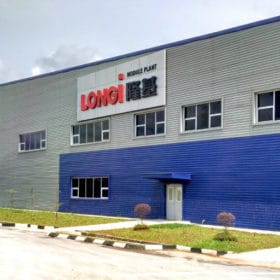
Longi claims new record for bifacial half-cut module as production equipment orders pour in
The Chinese monocrystalline panel maker said its 72-cell bifacial product has reached an ouput of more than 450 W on the front side. The result was confirmed by Germany’s TÜV-SÜD.
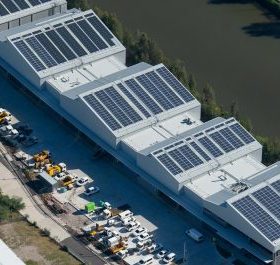
How to profitably upcycle 80 million tons of PV waste in Australia by 2050
Research by the University of New South Wales has examined the economic barriers, technologies and opportunities of recycling end-of-life silicon PV modules for profit.

Trump’s trade war tweets badly timed for Chinese solar manufacturers
Latest tirade may simply be a crude bid to up the ante with a high-profile Chinese deputation due to visit the U.S. in the latest round of trade talks this week but its timing is worrying for the Chinese solar companies struggling under huge debts.

Shunfeng’s steadily rising revenue cannot distract from its debt worries
Straining under a $2 billion debt mountain, the solar manufacturer is pinning its hopes on the proposed sale of its Jiangsu Shunfeng subsidiary to prevent it suffering the same fate as the original parent company of the Wuxi Suntech unit that makes up part of the Jiangsu division.

Interview: Is Russia’s embrace of renewable energy a reality or a myth?
The superpower has always been seen as a fortress for oil and gas but positive signs are emerging from its renewable energy sector.

Yingli reveals the full extent of its huge debt mountain
The SEC filing lodged by the Chinese manufacturer today tells the tale of ever falling panel prices, production shutdowns prompted by cashflow crises and multiple legal claims from creditors, as the company warns it could face being broken up.

US solar equipment supplier set to bank on Longi ambition
New York State-based Linton Crystal Technologies announced plans to bring its Chinese ingot production equipment business under one roof just hours after its major customer outlined its intent to manufacture even more monocrystalline panels.
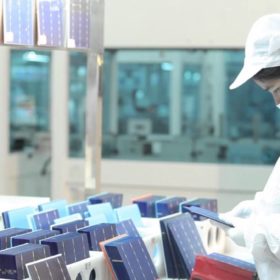
Jinko announces 5 GW wafer factory and 10.7 GW of module supply deals
The new manufacturing facility will be located in Leshan, in China’s Sichuan province and will produce monocrystalline wafers. It will raise the group’s wafer capacity to around 11.5 GW. Meanwhile, large supply deals are said to have come from markets including Vietnam, Mexico and Spain.
