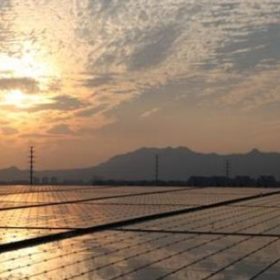
Digging down into Hanergy’s latest impressive figures
The first-half results appear to indicate a renaissance for a thin-film manufacturer still suspended from the Hong Kong Stock Exchange, but a strategy of having affiliate companies invest in Chinese industrial parks to secure returns from the resulting orders for manufacturing equipment, may make would-be investors uneasy.

Solargiga confirms dramatic turnaround in figures
Chinese solar manufacturer reports a similar scale of first-half losses to the $15m profit it posted this time last year. Will the company’s decision to almost double module production capacity prove an inspired move or a mistimed disaster?
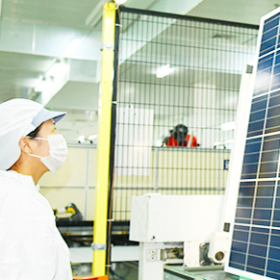
China’s Akcome to sell 503.5 MW of solar to ZPEG
China’s Jiangsu Akcome Science and Technology has revealed plans to sell 503.5 MW of solar to Zhejiang Provincial Energy Group (ZPEG), as it struggles to rein in its debts.
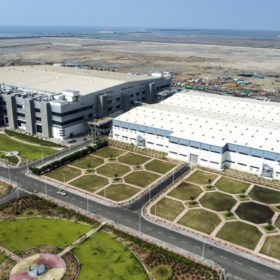
India’s SECI reduces manufacturing tender size from 5 GW to 3 GW
In a major development, the Solar Energy Corporation of India (SECI) has reduced its solar manufacturing tender size from 5 GW to 3 GW, and curtailed the minimum bid capacity from 1 GW to 600 MW. The size of Power Purchase Agreement (PPA), however, remains unchanged at 10 GW.

EnergyTrend expects price shuffle after EU ends MIP
According to the Taiwanese analysts, the solar PV module market is still stable. However, EnergyTrend expects a new price war to erupt with the end of minimum import tariffs (MIPs). In particular, Taiwanese manufacturers will have to cope with increasing price pressure.

Austria: Energetica aims for gigawatt module production capacity by Q3 2019
In a bombshell announcement at the start of the week, the PV company said it would construct a gigawatt solar module fab in Austria. Now, Rene Battistutti, CEO at Energetica Group tells pv magazine why he believes the company’s modules are competitive with Asian products.

US: Ohio business community backs 2.2 GW of Ohio solar
Speaking the language of manufacturing, employment, and economic opportunity, five prominent corporations have backed a 2.2 gigawatt solar goal for Ohio by 2030.

Silfab unveils US manufacturing site with $40 million investment in Itek Energy
Canada-based Silfab Solar has invested US$40 million in U.S. solar PV module manufacturer, Itek Energy, LLC’s Bellingham, Washington production facility.
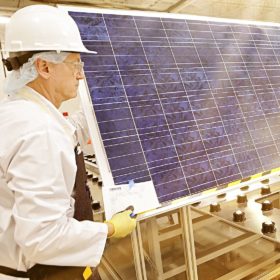
Lion Point Capital offers $250m to support Canadian Solar’s go-private bid
Shares of Canadian Solar soared earlier this week after U.S. investment firm Lion Point Capital revealed that it had initiated discussions with a number of undisclosed third parties about the possibility of funding the privatization of the solar PV module supplier.

US data suggests collapse of PV module imports in the wake of Section 201
Newly released EIA data shows overall module shipments falling by two thirds in the second quarter of 2018, while pre-tariff prices remained relatively steady.
