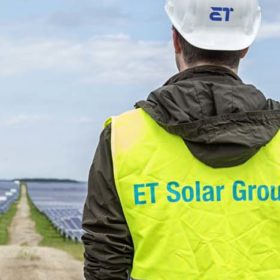
ET Solar describes “reorganization” of its US module sales business
The Chinese PV maker and developer has made a statement regarding the bankruptcy of U.S. subsidiary ET Solar Inc.
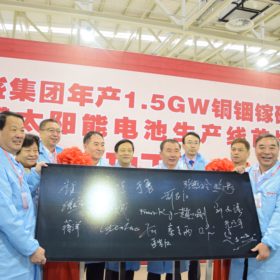
Avancis/CNBM 300 MW CIGS facility comes online
China National Building Materials (CNBM), the parent company of German module manufacturer Avancis, announced that the first modules have rolled out of its 300 MW CIGS factory in Anhui Province, China.
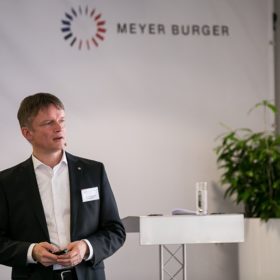
Simple, powerful, demonstrable: Meyer Burger on why HJT is poised for the mainstream
Interview: Following the announcement earlier this month that Swiss production equipment supplier Meyer Burger has increased the power output of its HJT SmartWire module to 335W, pv magazine caught up with company CTO, Gunter Erfurt to understand more about the process, as well as the company’s longer-term tech roadmap.
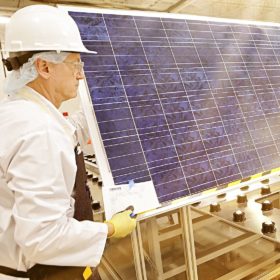
Canadian Solar privatization offer prompts stock surge, possible industry trend
Solar stocks surged yesterday after Canadian Solar announced it had received a “going private” proposal, reports Zacks. Analysts at Guggenheim, meanwhile, say the offer will be given “serious consideration.” They believe other companies may follow suit, if accepted.

Hyet Solar seeks investors for 200 MW module fab in India
The Dutch solar energy company is hoping to attract investors in a proposed 200 MW solar manufacturing facility in the Indian state of Assam.
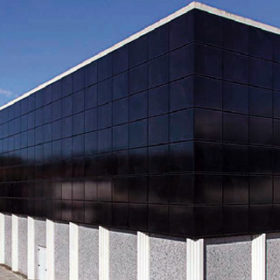
Solar Frontier to venture into BIPV — report
Japan’s Solar Frontier plans to start integrating its thin-film PV technologies into materials for walls and roofs, with sales expected to begin before the end of the decade, according to a recent report.
Canadian Solar next Chinese company to consider privatization
Canadian Solar Inc. has received a “going private” proposal from chairman, president and CEO, Dr. Shawn Qu, under which he offers US$18.47 per common share. The move follows that of Trina and JA Solar.
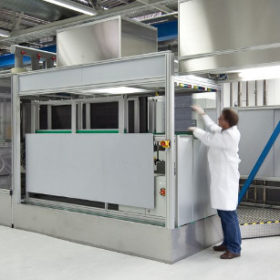
NexWafe secures $9.4 million for kerfless wafer project, targets 50% cost reductions
NexWafe GmbH has completed €8 million (around US$9.4 million) in financing for the next stage of its kerfless wafer manufacturing plans. The company sees big market potential for the product, which projects cost reductions of 50%.
Meyer Burger announces at least 100 jobs will go at Thun
Following a consultation process with employees, Meyer Burger has announced 100 jobs will definitely go as part of the closure of its Swiss manufacturing site. Another 60 positions are dependent on strategic alternatives being found.
Longi claims 82.15% bifaciality record for its PERC solar cell
After announcing a record 22.71% conversion efficiency with its monocrystalline passivated emitter rear contact (PERC) solar cells in October, the Chinese solar manufacturer now claims it has achieved an 82.15% record bifaciality for the bifacial version of the same cell.
