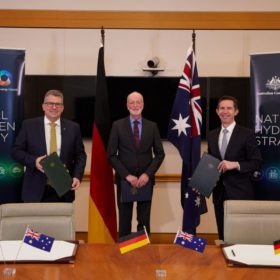
Australia and Germany shake hands on green hydrogen future
The two nations have brought their national hydrogen strategies together after signing a new agreement for a joint feasibility study into green hydrogen production and trade. The agreement was welcomed around the country as auspicious of Australia’s potential as a global green hydrogen superpower.
Leclanché restructure delayed
Eneris Group has suspended its financial commitments for the time being and Leclanche shareholder Fefam has provided a bridge loan of CHF34 million to give the historic company more time to set up a joint venture for large scale battery cell production in Europe.
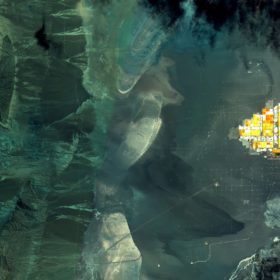
How long will the lithium supply last?
Researchers have sounded the alarm. If no serious efforts are made on second-life battery use, recycling and vehicle-to-grid applications, decarbonization efforts may hit the buffers a lot sooner than expected.
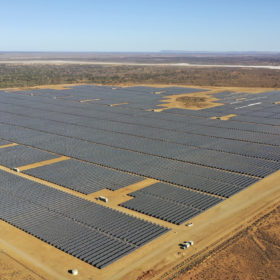
EU Green Recovery plan could support 2.3 GW of Spanish solar project capacity
Three big projects are candidates for support from the Covid recovery plan laid out by the bloc.
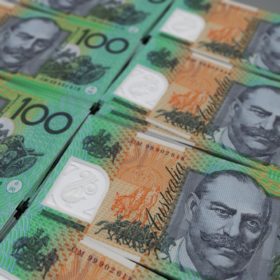
Covid-19 weekly round-up: Australian states target green recovery as France devotes €30bn to energy transition
Clean energy power plants will figure prominently as Queensland and Victoria bid to reset their economies for a post-coronavirus world. France suffered a hit to its new solar deployment figures in the first half of a Covid-hit year but its neighbor appears to have no such concerns.
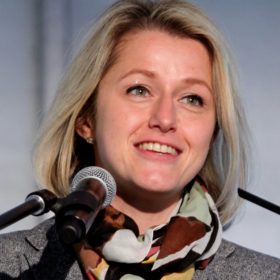
France wants 6.5 GW of hydrogen capacity by 2030
Government ministers Barbara Pompili and Bruno Le Maire today unveiled a national strategy for carbon-free hydrogen to the French Association for hydrogen and fuel cells and other major players in the state’s hydrogen economy.
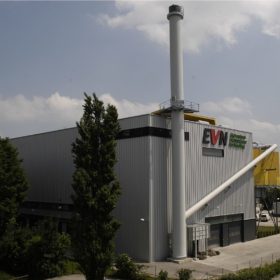
Power-to-heat for district heating may drive wind and solar
Researchers say the technology could help drive clean energy deployment in countries with limited grids or in isolated, coal-based energy systems. According to their model, Kosovo could see a strong increase in wind and PV capacity if power-to-heat is coupled with thermal energy storage for fixed-capacity district heating.
China could be preparing to settle unpaid subsidies mountain
In-country analyst the AECEA has speculated the authorities could be ready to wipe the slate clean for the start of the nation’s 14th five-year plan on January 1. The analyst has raised its solar expectations for the year but noted the sky-high price of polysilicon remains a concern for developers.
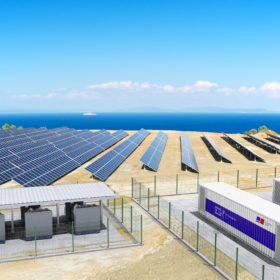
Solar-plus-storage for the Cook Islands
Around 4.2 MWh of energy storage capacity will be connected to a solar and diesel micro-grid on Rarotonga, the largest of the islands in the South Pacific nation. Three 40-foot containers with a total power output of 4.8 MVA will be used as a power reserve and for grid support by utility Te Aponga Uira.
Daily news round-up: Philippines could be set for 1.5 GW more solar and Tesla CEO has been dreaming of electric flight
Plus, details have been revealed of a 2 MW/2.5 MWh grid scale storage demo project in Switzerland and for a peer-to-peer renewable energy certificate marketplace in Southeast Asia.
