
UK Power Networks to launch London’s first VPP
Distribution network operator, UK Power Networks is on track to launch what it says is London’s first virtual power plant (VPP). To this end, batteries will be installed on around 40 homes in the U.K. capital.
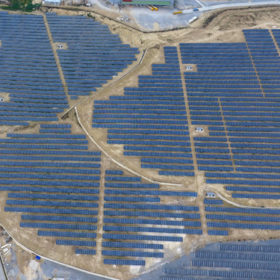
Turkey: ‘Localisation’ trend dominates the energy sector
Turkey is going to the polls on Sunday, and many wonder whether president Recep Tayyip Erdoğan’s gamble on a snap election could backfire. Unless there is a shock at the ballot box though, the nation’s energy sector trends are unlikely to be challenged.

India moots world’s largest solar tender – of 100 GW
If implemented, the huge tendering exercise would dwarf anything that has gone before it. Minister explains bidding will also include solar manufacturing and storage elements.

The smarter E show: A wealth of innovations rewarded
At the smarter E-Intersolar Europe trade show this week, awards have been given to the technologies driving the energy transition to a low carbon future. Prizes include the Intersolar Award, recognizing PV technology; the EES prize for storage innovation; and the smarter E awards – one of which was given to an off-grid agricultural project in Australia.
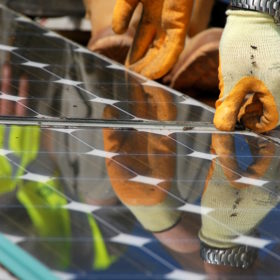
Remote survey tool could offer solar future free of policy constraints
Welsh consultancy’s technology could help business, universities and local councils make fuel savings regardless of lack of PV subsidy in the U.K.

Intersolar: Indian minister outlines plan to become global renewables leader
Underlining India’s commitment to becoming the global renewable energy leader, Shri Anand Kumar, Secretary of India’s Ministry of New and Renewable Energy, said the country plans 500 GW of capacity by 2030. He also underlined India’s plans for becoming a solar and storage manufacturing hub; and said the International Solar Alliance needs to widen its membership.

Lead free perovskites could unlock solar storage potential
Scientists at Oxford University say two lead-free perovskites investigated for their potential to raise the efficiency of solar modules – when used in tandem with high efficiency silicon cells – may also offer a leap forward in solar storage technology. In a paper published in Applied Physics Letters, Feliciano Giustino and George Volonakis, suggest halide […]
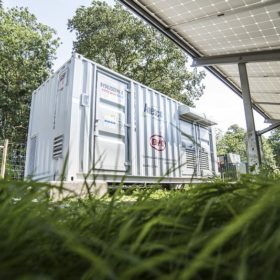
National Grid UK to receive ancillary services from 27MWh of storage capacity
ESB and Oersted UK independently announced this week they have acquired storage assets to deliver ancillary services to the UK grid operator.

Falling battery costs to push solar, wind to 50% electricity generation by 2050, but electricity still failing CO₂ reduction targets – BNEF
Solar PV capacity is set to grow 17-fold, and wind six-fold, by 2050, to account for nearly half of global electricity generation, predicts BNEF, while investments will reach US$11.5 trillion. Cost reductions will drive this charge, particularly in the battery market, which will benefit from the EV manufacturing ramp up. Despite this, the electricity sector is still failing to bring CO₂ emissions down to the required levels, with its continued dependence on gas.

India to launch its own battery cell production
India’s PV sector is expanding at a serious pace, creating jobs and further securing energy supply for many businesses. Yet, sourcing battery cell technology at the current rate resulted in annual foreign exchange of $150 million creating deficits, that hopefully can be averted in the future.
