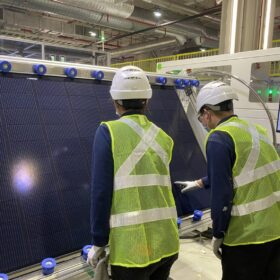
Brookfield, Reliance aim to kick off new era in Australian solar manufacturing
Brookfield’s bold ambitions for Australia have reached a new level, with the global asset manager signing an agreement with India-based Reliance Industries to explore the production of solar panels, long-duration battery storage, and other renewable energy equipment.
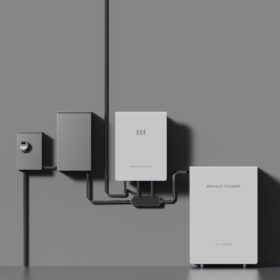
Mango Power introduces 12 kW / 15 kWh whole home battery
The Mango Power M includes a hybrid inverter with 18 kW solar input and can be paired with an electric vehicle charger.
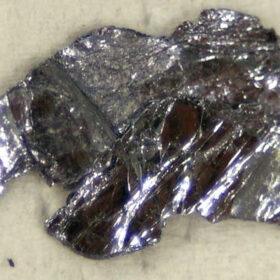
The Hydrogen Stream: Chinese scientists exploring new catalysts for hydrogen
Shanghai University scientists have started researching molybdenum-doped nickel-cobalt phosphide catalysts for hydrogen production, and Indian scientists have devised a method to produce hydrogen from methanol.
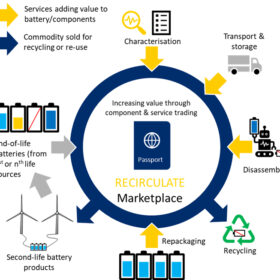
Recirculate – giving EV batteries a second-life
With the rapid growth in electric vehicle (EV) demand bringing fears of a mountain of EV battery waste piling up further down the line, the EU-Swiss government-funded Recirculate program is planning how to keep batteries in use for much longer before they head to recyclers.

Romania resumes development of 1 GW pumped hydropower project
Romania is resuming the development of the Tarniţa Lăpuşteşti pumped hydro storage project, with a planned capacity of 500 MW to 1 GW. It will be the first installation of its kind in the country.
Pexapark notes demand for renewables-plus-storage assets in Europe
Pexapark, a Swiss consultancy, has studied energy storage drivers, value streams, contractual agreements, and regional perspectives in Europe. It says that one obstacle to deployment is the inability to properly model revenue, and notes that 15% of companies plan to use AC coupling for projects in the next three years.
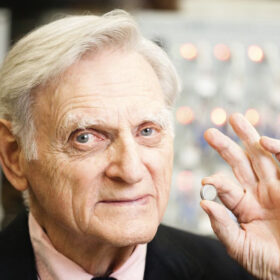
Weekend Read: Much more than Goodenough
The world would have been a different place today had John Goodenough accepted the Shah of Iran’s $7 million offer, in 1974, to carry out solar research. Instead, he secured a job as the head of inorganic chemistry at the University of Oxford. During his tenure, he made a lithium-ion battery discovery that would affect the lives of almost everyone.
The Hydrogen Stream: Germany to use hydrogen ‘in all sectors’
The German authorities have announced plans to double domestic electrolysis capacity to 10 GW by 2030, BloombergNEF has reported that green hydrogen became competitive with gray hydrogen earlier than expected, and Chinese researchers have presented new research on microbial hydrogen production.
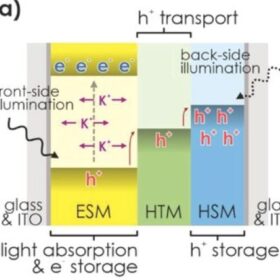
Solar batteries with simultaneous light absorption, storage
Scientists at the Max Planck Institute for Solid State Research have developed a bifunctional solar battery device that enables simultaneous light charging, charge storing, and electric discharging. The device relies on a bifunctional carbon nitride photoanode to harvest sunlight and store its energy via trapped electrons.
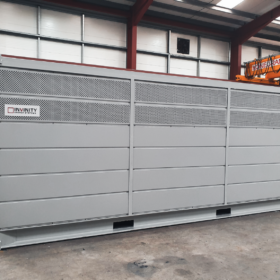
Horizon focusing on vanadium flow batteries for energy storage
Horizon Power, Western Australia’s regional power supplier, has revealed plans to deploy a 78 kW/220 kWh vanadium flow battery.
