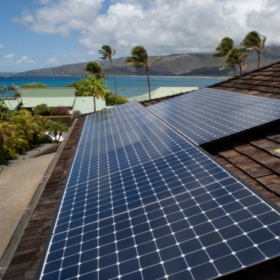
Hawaii utilities seek more renewables, storage and now grid services too
Hawaiian Electric Companies has laid out plans to source the equivalent of 135 MW of solar and 1,378 MWh of energy storage – as well as load shifting and frequency response from distributed energy resources through aggregators.
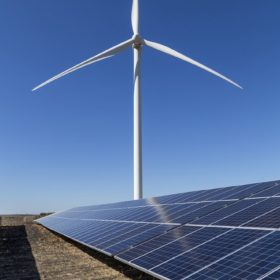
EDP to build Portugal’s first MW-sized PV plant coupled with storage
The 3.8 MW project is conceived for self-consumption of two facilities of the lead-acid battery manufacturer Exide in Castanheira do Ribatejo and Azambuja.
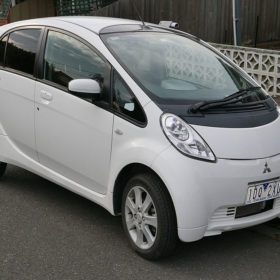
Mitsubishi offers residential solar-plus-storage EV charging in Japan and Europe
The Dendo Drive House includes a solar system, residential storage and a bi-directional charger. Mitsubishi says it reduces electric bills and fuel costs by enabling battery charging from the grid at night, when power prices are cheaper, and can also draw power from an electric vehicle.
Belgian scientists develop solar hydrogen panel
The innovation is said to be able to produce 250 liters of hydrogen per day and can convert sunlight and water vapor from the air directly into hydrogen gas with an efficiency of 15%.
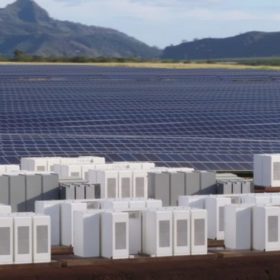
Storage set to come of age in the next five years
The transition for utility scale storage from offering short duration, high value grid services to the world of long duration energy peaking could spell the end of fossil fuel backup generation within five years.

EBRD to help Lebanon’s solar plus storage tenders
The nation has plans for two ambitious renewable energy tenders but the procurement process is dragging and Lebanese institutions lack experience in designing such schemes. A solution will be provided by Europe.
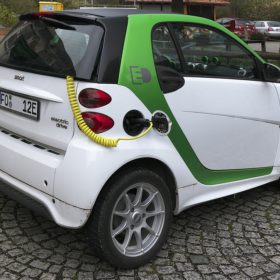
Italy offers incentives for EVs
A budget of €60 million has been allocated for this year, in 2020 and 2021 it will rise to €70 million. Applications for the incentives can be submitted from today.

New billing method and PV+storage for allday energy supply on Philippine island
No more than four hours per day, did the 160 households enjoy energy supply. This has had negative impacts on the economic development of the islands. With support from the ADB, the island inhabitants now have 24h supply of clean energy, and new billing methods that suit the economic realities of poorer households.
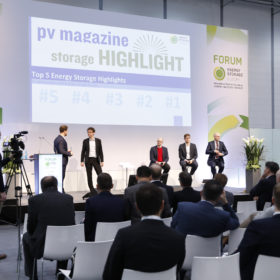
Video: Storage Highlights winners in interview
Messe Düsseldorf has partnered with pv magazine for a special publication for Energy Storage Europe 2019. As part of the project, we tasked an independent jury of experts to rank a range of Energy Storage Highlights that were exhibited at the event. During the show, our editors caught up with the top five entries to get a bit of an insight.
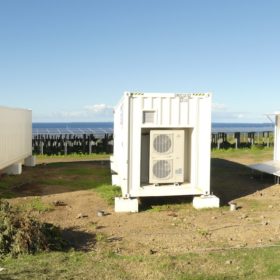
EU must move faster on storage and EV, European Court of Auditors says
In the paper “EU support for energy storage”, the audit agency said that measures taken so far for storage and electromobility development across the EU will not be sufficient for the achievement of the Union climate targets. The authors of the report also stressed that EU is far behind its competitors for battery cell manufacturing, and that more innovation is needed. They also claim development of grid energy storage is being slowed down by double grid fees in some EU countries, including Austria, Germany, Netherlands and Finland.
