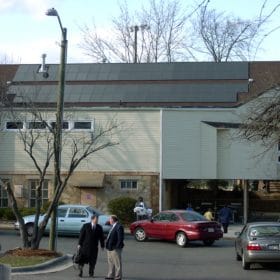
Finance platform targets underserved small-scale solar projects
A spin-off of the Connecticut Green Bank, IPC is a not-for-profit investment fund that scales clean energy financing and channels investment capital to communities that need it most.

End of subsidies could fuel the corporate PPA boom in Europe
Pioneering solar projects which signed ten-year feed-in tariff agreements will soon need to operate free of subsidy and with local authorities like the City of London starting to embrace direct contracts with renewables generators, the PPA market could be set for another turbo charge.
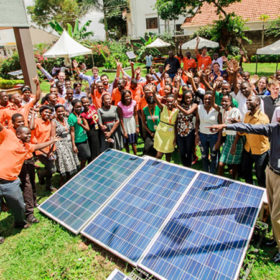
African Development Bank opens $50-60m pot for off-grid solar Covid recovery
The development lender has established a Covid-19 Off-Grid Recovery Platform with impact investors from the Netherlands, U.S. and U.K., to offer affordable loans to off-grid solar companies operating in Africa.
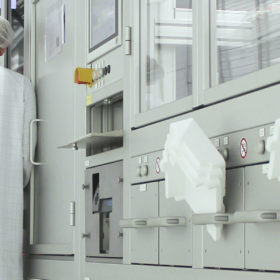
Finnish solar manufacturer finally starts production in Vilnius
Valoe completed the 15-month purchase process of a 60 MW cell production line from Solitek in the spring and installed interdigitated back-contact production equipment. It hopes to begin deliveries in the next quarter.

Energy Infrastructure Partners invests €530m in Baywa re
The Baywa group will maintain a 51% stake in the German renewable energy company.
Ramping up renewables now could save Europe €363bn by 2050
Delay, and policymakers will see the carbon emission allowance which would enable us to stay well below 2C frittered away so quickly net zero would have to be reached in 2040, rather than ten years later, when the relevant technology costs will be cheaper.

Biden, the EU and China to usher in ‘golden age’ for solar – Jinko
The company shipped a record 5.1 GW of modules in the July-to-September period and expects to hit up to 19 GW for the year, with ‘nearly 100%’ of its products likely to be based on monocrystalline technology in 2020.
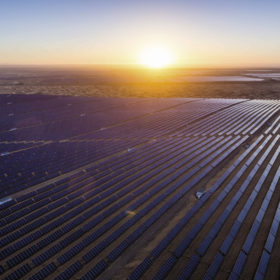
GCL shareholders set for a busy festive period as votes loom on $903m worth of solar project sales
Chinese state entities are now behind five phases of two separate sales deals which, if approved, will transfer more than 1.8 GW of solar generation capacity into public ownership.
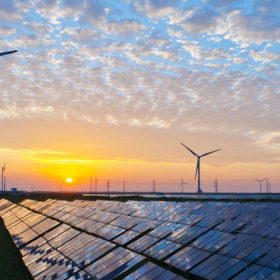
McKinsey: EU slated for 44 GW annual PV additions in cost-neutral path to net-zero
Business analysts at McKinsey & Company have worked the numbers and found that investments into new infrastructure and technologies necessary to achieve the net-zero target will likely be offset by savings in other sectors. Europe’s PV sector could grow to about three times its current size over the next decade.
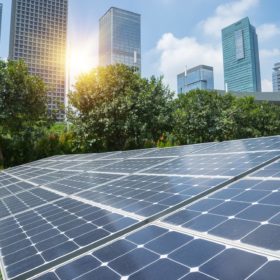
The roadmap to the lowest cost grid is paved with distributed solar and storage
We wanted to know what the grid would look like, and cost, if we stopped ignoring the benefits of distributed energy resources and optimized their integration through a better modeling process. We found that when you use better planning models and scale both local solar and storage, as well as utility-scale solar and wind, you maximize cost savings and unlock the path to the lowest cost grid.
