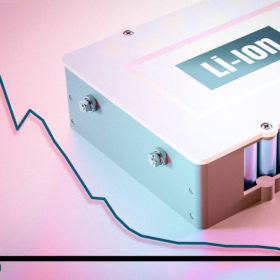
Behind the price drops in lithium-ion batteries
Scientists in the United States pieced together data from hundreds of different sources, looking to establish the key factors that have led to consistently falling prices for lithium-ion technology since their commercialization thirty years ago. They find that public-funded research, primarily in chemistry and materials science, has made the largest contribution to cost reduction. And they offer suggestions on policy and investment to ensure that the research can continue to make these important contributions to reduction in battery costs.
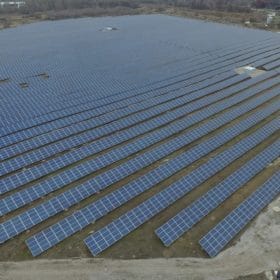
A net-zero Canada would need 1.6 GW of solar per year from now on
Clean energy trade group the Canadian Renewable Energy Association has told policymakers CA$8 billion worth of solar and wind projects will be needed each year to decarbonize the electricity supply by 2035 and remove net emissions by mid century.

European Commission approves €2.3bn renewables incentive plan by Greece
Competitive bidding for onshore solar and wind will establish a clean-power strike price acceptable to successful developers under the contracts-for-difference approach. The incentive scheme is also applicable to biogas, biomass, landfill gas, hydropower, concentrated solar power, and geothermal plants.
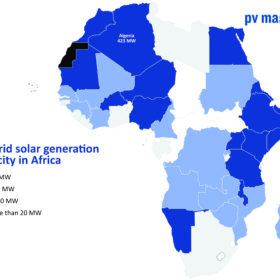
Cheaper wholesale solar equipment through $10m group-buying fund in Nigeria
Two investors backed by the charitable foundations set up by energy giants have seed-funded the cash pot to lend to African solar companies, who will be able to buy solar kit cheaper thanks to the economies of scale offered by the aggregation of orders.

African Energy Week highlights lack of support for renewables
The closing day of the African Energy Week event held in South Africa this month heard voices casting doubt on a renewables-only energy transition and calling for a gradual change and continued investment in petrochemical production.

London developer secures backing for 500 MW of solar in the UK
Queequeg Renewables says it has formed a joint venture with an Italian private equity investor to fund the first slice of a planned 1.3 GW solar-plus-storage portfolio in Britain.
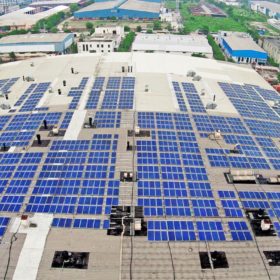
Indian developer Azure Power secures sale of electricity from 600 MW of solar projects
The company has landed the signature of state-owned body the Solar Energy Corporation of India, which awarded Azure 4 GW of solar farms in return for the developer committing to set up 500 MW worth of cell and module production lines.

Eni plans IPO for Plenitude, its new ‘energy transition’ unit
The new company will comprise all group’s business for the development of renewable energy, the sale of energy solutions, and the creation of a widespread EV charging network.
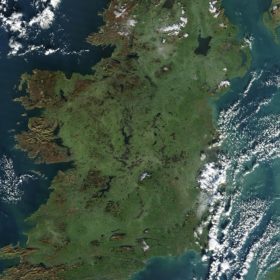
Ireland cites need for 1.9 GW more solar this decade to stay on track for net zero
Although wind power dominates the renewables scene in the Republic of Ireland and the North – and even natural gas has a bigger role to play – the grid companies of the neighbors have revised up their estimates of how much solar will be needed, after talking to the public and industry.
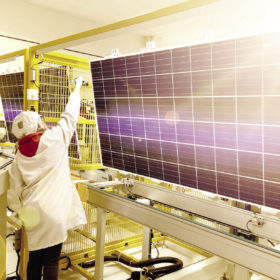
Canadian Solar prepares to rein in production capacity expansion plans
While the Sino-Canadian business expects high polysilicon and shipping costs to be a temporary problem, CEO Shawn Qu has acknowledged the company will have overcapacity in cell and wafer production lines by the end of the year.
