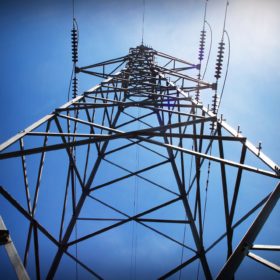
U.K. takes another tiny step to smart energy system
Energy regulator Ofgem has announced it aims to bring in market-wide half-hourly settlement across the retail electricity market – from October 2025. The long timescale reflects a sluggish attitude at an inconsistent regulator which appears to be planning an unpredictable route to net zero.
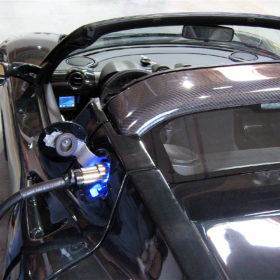
Add electric vehicles, not bulk transmission, for a low-cost, clean grid: UC Berkeley study
A 90% clean grid with a transition to EVs would achieve lower electricity costs than one without, the study shows. Transmission investments would mainly be spur lines to new renewable generation.
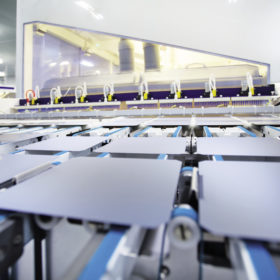
Longi crowned king of solar with 24.5 GW of panels shipped in 2020
With production capacity expanded for solar wafers, cells and modules last year, and set to rise again in 2021, the giant is targeting shipments of 40 GW of panels this time around.
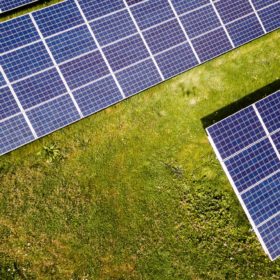
Irico emphasizes picture of boom time for solar panel glassmakers
The state-owned PV glass manufacturer, which claims to be one of the world’s big three, hived off its distracting new materials, solar module, and solar project development businesses to focus entirely on its core output in 2020.

Covid delays drove 20% dip in solar project revenue for Chinese developer last year
But new ventures into coal-fired steam and petrochemicals products helped state-owned China Shuifa Singyes towards a significantly healthier balance sheet in 2020.
GCL confirms thumping annual loss for 2020
The polysilicon maker lurched from a $17m profit in 2019 to a $960 million loss last year, according to an unaudited extract from its overdue annual figures. Publication is being held up by an auditor enquiry relating to a $71m abandoned-production-project pre-payment which appears to be either owed by, or to, a GCL subsidiary.

No bifacial solar in West Africa? That’s likely to change soon
A technology-focused event held by the Africa Solar Industry Association has heard development pipelines across the continent are swiftly changing to accommodate double-sided PV panels, and that’s good news for solar tracker providers too.

ECJ indicates EU member states free to revise signed feed-in tariff contracts
The court has agreed with advocate-general Henrik Saugmandsgaard Øe that Italy’s move, in 2014, to reduce solar incentive payments contained in signed agreements held by developers does not breach EU law.
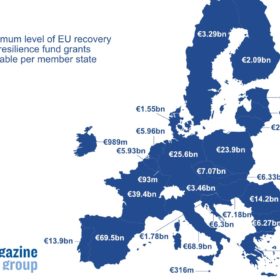
EIB and Greece agree first in EU to co-manage €5 bln of recovery plan
The European Investment Bank and Greece this week signed a first-of-its-kind agreement to jointly manage €5 billion of investment concerned with the EU member state’s post-Covid recovery plan. The strategy has a key focus on green energy.
Italy should embrace solar, not gas to hit raised climate ambition
Instead of splurging €11 billion of EU cash on uneconomic new generation capacity, the Italian authorities–and electricity bill payers–would be better served investing in a mix of current clean power technologies which would include almost 17 GW more solar capacity.
