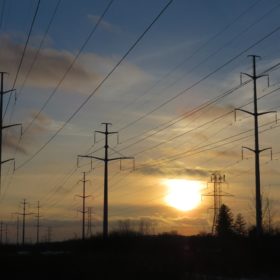
Solar-plus-storage vs grid enhancement
Ontario’s Independent Electricity System Operator will implement a pilot project for a future electricity market based on PV, storage and smart power consumption. The utility says the project will be a cheaper, more efficient alternative to expanding grid infrastructure.

Mini series: Social justice solar expands, trains, empowers
Erica Mackie is the CEO of Grid Alternatives, a U.S.-based nonprofit organization that has helped nearly 15,000 low-income families to go solar at no cost. It has also provided more than 42,000 people with solar education and job training. Mackie co-founded Grid Alternatives in 2001 while working as an engineer in the private sector, and since then the organization has become a driving force for access and equity in the PV industry.

ABB called out by UK Solar Trade Association over quality and customer support
The STA has warned Italian company Fimer, which is set to acquire Swiss company ABB’s inverter business, it will have to honor customer service commitments made to its British members, and voiced fears related to historic quality issues with ABB inverters.
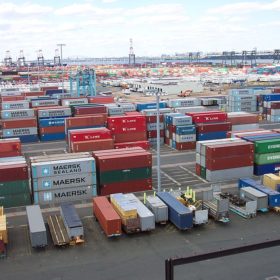
Ukraine orders lift Risen up overseas module shipment rankings
The Ningbo-based manufacturer shipped more than a quarter of the panels it exported in the first six months of the year to the eastern European nation. All the big manufacturers posted rising shipment volumes as emerging markets made up for slow growth in their homeland.

R.Power receives ‘record funding’ for 33 MW Polish portfolio
Europe’s coal powerhouse is making progress in the deployment of renewable energy and it appears that the nation’s banks are beginning to see the value of clean-power investment.

Latest Malaysian tender attracts bids for 6.7 GW of capacity
The third round of the nation’s Large Scale Solar procurement program was oversubscribed more than 13 times its 500 MW limit. The final electricity price is likely to beat the previous $0.079-0.13/kWh to settle somewhere around $0.042-0.057.

Poland announces plans for 1.1 GW of solar
A 600 MW project will be built on degraded land by a Polish investment fund and utility PGE has agreed to build a 500 MW facility for one of the country’s largest energy intensive companies – copper and silver producer KGHM Polska Miedź.
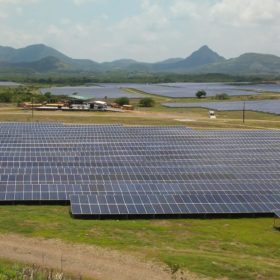
France added just 397 MW of solar in six months
At the end of June, France’s installed PV capacity topped 9.3 GW for a 4% increase on the figure recorded at the end of December. Only 397 MW of new capacity was put into operation, however, a much lower figure than the 490 MW deployed in the same period of 2018. Why?

Longi brings forward manufacturing capacity plans by a year
Having stated an intent to hit 65 GW of annual mono wafer production capacity by the end of 2021, the Chinese solar manufacturing giant has now said that landmark will be achieved next year.
Namibia and Botswana mull 20-year, 4.5 GW solar push
The governments of the two African nations are considering deploying huge volumes of generation capacity over two decades. The project, still in its initial phase, is being supported by the World Economic Forum’s Global Future Council on Energy.
