
Hungary unexpectedly terminates FIT for PV projects ranging from 50 to 500 kW
The Hungarian government has amended its recently issued support scheme METAR, in order to introduce a tight deadline for residential and commercial PV, which will, in reality, mean the end of most of projects in this segment. The METAR scheme had been approved by the European Commission last summer.
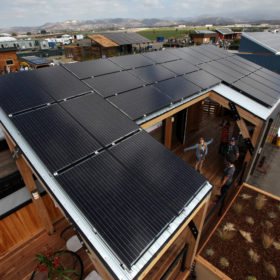
Blockchain could significantly shape management of renewables, but challenges remain – report
The evolving outlook for project finance, as well as the gradual maturation of technologies, such as blockchain, present new challenges and opportunities for renewables, EY says in its latest Renewable Energy Country Attractiveness Index (RECAI) report. Uncertainty in the sector continues to drive a “relentless focus on cost” to soften the impact of protectionism, subsidy cuts and rising interest rates throughout the world, it adds.
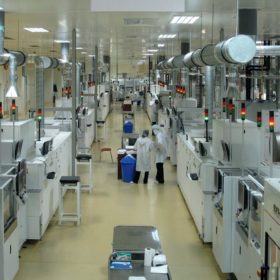
The Weekend Read: Three questions facing Indian solar
PV in India: The seemingly serene solar journey that India was on has hit stormy waters in recent months as issues regarding tariff duties, domestic content and financial backing have served to shake confidence in the industry. But there still exists fantastic potential across the nation for PV to really embed itself as India’s favored power source, provided it can address these three key questions.

Nepal launches tender for large-scale solar
The Nepal Electricity Authority is seeking bids for projects ranging from 1 MW to 5 MW across 25 sites.

Ukraine has now 63 MW of solar under net metering
The net metering scheme, which is open to rooftop solar PV projects not exceeding 30 kW in size, was introduced by the Ukrainian government in 2015.
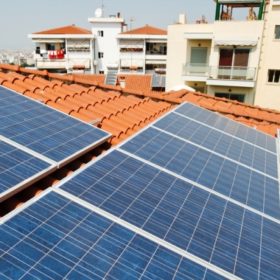
India: Rooftop PV targets missed, ground-mounted and off-grid exceeded
In the past financial year, India missed its rooftop solar PV targets, although it did exceed those for both grid-connected ground-mounted and off-grid systems, reports the Ministry of New and Renewable Energy. Bridge to India believes the government’s rooftop targets have been set at the wrong level and that around 10 GW will be installed by 2022, rather than 40 GW.
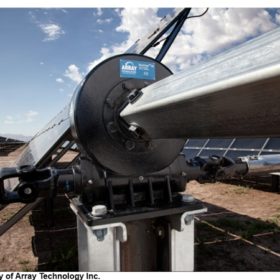
sPower, Array Technologies announce multi-gigawatt US tracker partnership
Over the next three years, Array expects to supply multiple gigawatts of trackers to the developer, as its “primary” tracker supplier.
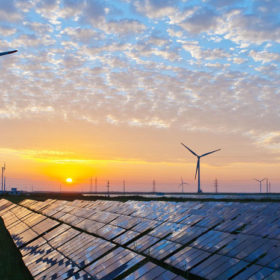
Solar, wind make up at least 94% of new US generation power in Q1 2018
Wind and solar dominated new electric capacity commissioned in the first three months of 2018 – even before you count behind-the-meter installations.
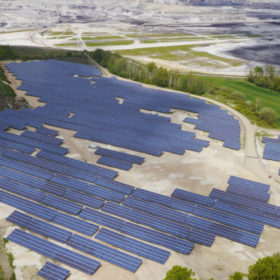
Germany covered 12.1% of its power demand with solar in April
Eon announced that, for the first time, more than 10 billion kWh of solar power were generated in Germany between January and April. Bruno Burger of Energy Charts has also determined that the last week of April was the best week for renewable energies in the current year, with a share of 53.2% in electricity generation across the country’s grid.
SkyPower Global enters deal to deploy 1 GW of solar in Uzbekistan
The Canadian solar developer has signed an agreement with local power utility, Uzbekenergo for several large-scale PV projects, which would span several regions in Uzbekistan. Overall, around US$1.3 billion is expected to be invested in this plan.
