Shell envisions central role for solar in new report
Shell’s new report shows a world where solar meets the largest portion of primary energy demand as soon as 2050.
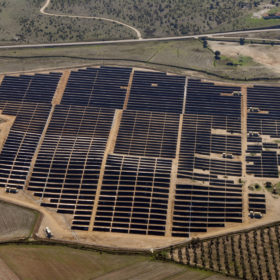
Spain: Government expects solar to dominate by 2030 with up to 77 GW
In a new report, the Spanish Ministry of Industry, Tourism and Digital Agenda has predicted that solar will become the country’s largest electricity source by the end of the next decade. Cumulative installed PV power could even reach 77 GW by the end of 2030, according to the most bullish scenario drafted by the Spanish government.

Solar Show Africa: Financing remains key bottleneck
Financing is the main bottleneck in the African solar industry, while private sector support is key for the deployment of PV projects. High quality products and solutions are also a focus. This is what came out of the recent Solar Show Africa event, held last week in Johannesburg.
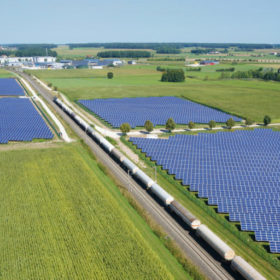
Germany adds another 200 MW of solar in February
After an encouraging start to the year, solar PV demand in Germany remained at January’s level. Almost half of the new additions came from ground-mounted power plants.
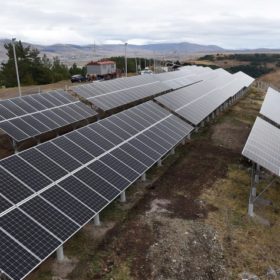
Fotowatio wins Armenia’s 50 MW solar tender
The solar facility will sell power to the local grid at around US$0.04/kWh. The project is part of Armenia’s six-year $58 million solar program.
Israel issues 1.6 GW scheme for rooftop solar
The scheme, set to be implemented over the next three years, includes net metering, FITs for small-scale solar, and a series of tenders.
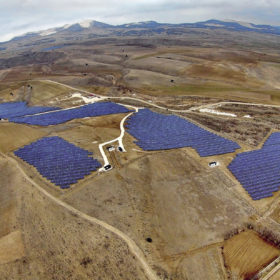
Fossil fuel global grip being loosened by holy trinity of affordable PV, wind and storage, finds BNEF
‘Unprecedented challenge’ for fossil fuels as low LCOE for solar and wind power, allied to tumbling storage costs, sees renewables claim larger share of bulk and dispatchable generation while adding vital flexibility to global energy mix.
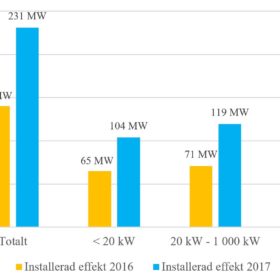
Sweden’s operational PV capacity tops 231 MW
Although there is still confusion between different numbers provided by the Swedish energy agency, Energimyndigheten, new statistics suggest that Sweden was the largest PV market in Scandinavia in 2017.
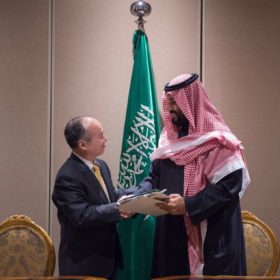
SoftBank, Saudi sign incredible 200 GW solar MOU – comment
A memorandum of understanding (MOU) has been signed between the Crown Prince of Saudi Arabia and Japan-based SoftBank founder Masayoshi Son, to establish the world’s largest solar PV energy project by 2030. How likely it is to materialize, and what will be done with the power, if it is realized, however, remains to be seen. Of more interest, says BNEF, is the first 7.2 GW phase.
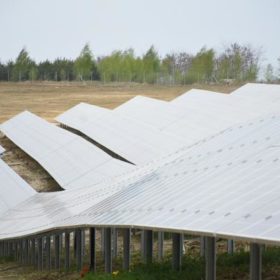
EBRD, Energy Secretariat issue guidelines for RE auctions in southeastern Europe
After releasing the guidelines for the grid integration of distributed generation power generators in February, the Energy Community Secretariat has now provided new instructions to help governments of southeastern European countries launch auction mechanisms to support large-scale solar and renewables.
