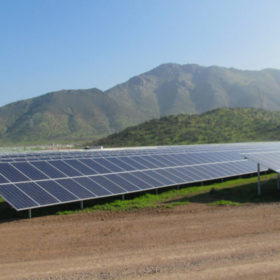
Chile: Plan for decommissioning of coal; solar to become primary energy source by 2030
The Chilean government said that existing coal power plants will be gradually closed, although by 2030, the fossil fuel is still expected to account for 25% of thermoelectric power production. Renewables, however, are forecast to cover the remaining 75%.
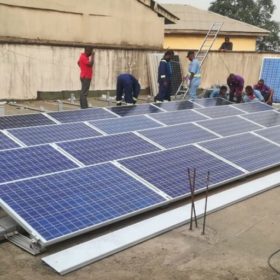
Soventix: “We are tired of depending on politics” – Interview
Interview: Soventix has been focusing on PV projects in developing countries for years. The German solar company is now building 11 hybrid plants for a Nigerian bank. Soventix CEO, Thorsten Preugschas explains in an interview with pv magazine what the particular challenges of such projects are and why investments are planned in Nigeria.
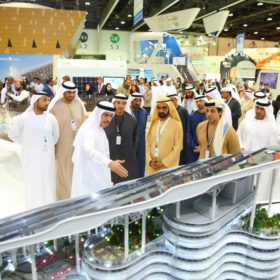
WFES 2018: Three trends driving PV in MENA
Two weeks ago, the 8th World Future Energy Summit opened its doors in Abu Dhabi. The conference and trade show comprised six co-located events across the cleantech spectrum, and attracted over 33,000 visitors across four days. The rapid increase in the scale of activity within the solar sector in the region was on display throughout the show. Here are three key takeaways from WFES 2018.
Kazakhstan: 1 GW solar, renewables auction; first bidding round planned for May
The long-awaited series of auctions is expected to see the participation of big players such as ACWA Power, Sky Power, Shell, General Electric and Goldwind, the Kazakh government said.

Belgium: Flemish solar market grew by 188 MW in 2017
Almost all of last year’s newly installed PV capacity comes in the form of residential PV systems not exceeding 10 kW, installed under net metering.

EU grants €578m for France-Spain renewable energy transmission link
In what is the largest ever energy grant to be issued by the EU, France and Spain’s interconnection capabilities are to be boosted to 5 GW once an undersea cable across the Bay of Biscay is finalized.
Burkina Faso announces plan to build eight solar parks totaling 100 MW
All of the eight projects, planned for seven different regions, will be awarded a declaration of public utility. The new facilities are expected to improve the country’s power supply, which still relies heavily on fossil fuels and imports.

Agfa, Ferrbatt sign agreement for distribution of PV backsheets
Anticipating growing market demand for its UNIQOAT backsheet, Agfa has partnered with Italian company, Ferrbatt to bolster local industry supply and support.

Netherlands installed 853 MW of solar in 2017, monocrystalline modules dominate
According to new numbers released by Good!/Solar Solutions, the Dutch solar market grew by 60% last year. PV currently covers approximately 2.2% of the country’s power demand, while monocrystalline modules accounted for around 60% of last year’s solar panel sales.
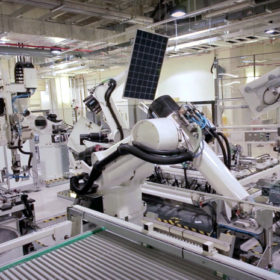
Trump opens the door for specific products, nations to be excluded from tariffs
The U.S. President’s proclamation provides a path for specific products to apply for exemption from tariffs, which had been sought by both SunPower and the government of South Korea. Additionally, imports from a number of developing nations are exempt as long as import levels remain small.
