
Dutch business regulation agency rules network operators lacking capacity are allowed to deny grid-connection
The Netherlands Authority for Consumers & Markets has established that the first-come, first-served principle applied by grid operators is the correct approach to manage current grid congestion. The decision was taken to resolve a legal dispute between Liander and an agricultural entrepreneur that was denied grid access for a PV project.

Gambian utility seeks consultants to improve water management with solar and renewables
Gambia’s national utility is seeking proposals for an energy and water audit of its water operations. Selected consultants will assess the possibility of using solar to improve energy efficiency. The utility will consider floating PV, rooftop arrays, and solar pumps.
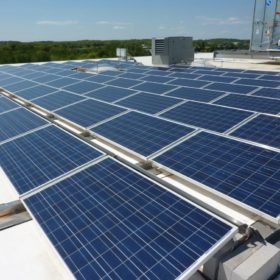
Belgium deployed 900 MW of PV in 2020
Renewable energy production increased by 31% and now represents 18.6% of the country’s electricity mix. Its cumulative PV capacity increased from 3,887 MW at the end of 2019 to 4,788 MW at the end of December.

South Korea opens its renewable energy market to PPAs
Power purchase agreements will be allowed between renewable energy producers owning plants with a capacity of more than 1 MW and electricity consumers. Local utility Kepco, however, will keep serving as an intermediary.

Indian reliance on polycrystalline tech production leaves it trailing China
Polycrystalline PV technology, which is seeing its market share tumble on the global stage, still dominates India’s small solar manufacturing base and is emblematic of the R&D shortfalls in the sector, according to a survey of the state of the industry.
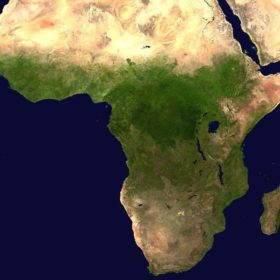
Mini grids grant could drive 80 MW of new capacity in Africa
A new fund established by the African Development Bank could attract $650 million of private money into the sector, according to the lender.

France’s PV tender for non-interconnected areas produces average price of €0.0986/kWh
The French government allocated 57 MW of PV capacity across 47 projects through the tender. Réunion and Guadeloupe were the territories with the largest allocated capacities.
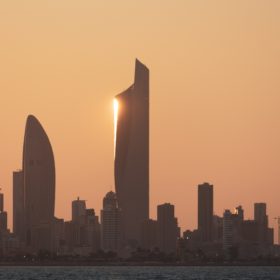
Confusion surrounds Kuwait’s mega solar plans
The state-owned Kuwait Petroleum Corporation has reportedly ended its involvement with the gigawatt scale Dabdaba solar field and asked the national body responsible for drumming up private sector investment to merge it with the 2 GW Shagaya renewables development.
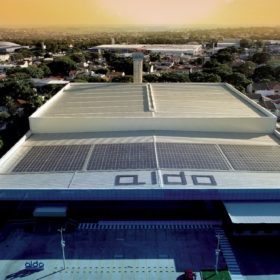
Brazil may add 9 GW of distributed solar over next two years
Brazil may see the deployment of 4 GW of new distributed generation solar capacity this year and another 5 GW next year, according to Aldo Pereira Teixeira, the CEO of Brazil’s largest PV product distributor and system integrator. In an interview with pv magazine, he explains why and how this huge growth could materialize.
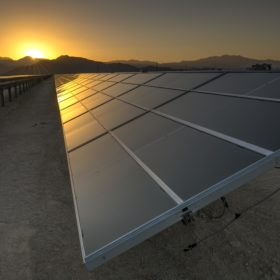
Capacity utilization a key issue in a world energized by renewables and hydrogen
A European research team has investigated the implications of renewable energy intermittency on capital utilization across a future electricity-hydrogen system, including transmission and storage infrastructure. According to its findings, idle capacity substantially increases the system costs and limits wind and solar development.
