
End of subsidies could fuel the corporate PPA boom in Europe
Pioneering solar projects which signed ten-year feed-in tariff agreements will soon need to operate free of subsidy and with local authorities like the City of London starting to embrace direct contracts with renewables generators, the PPA market could be set for another turbo charge.
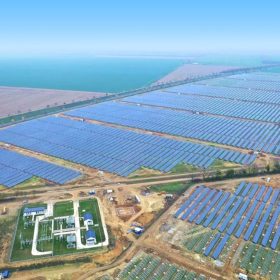
100 MW solar park comes online in eastern central Europe
The solar plant is located in Kaposvàr, southwest Hungary, and will sell power at €0.09/kWh under the country’s feed-in tariff regime.

Kazakhstan’s solar auctions conclude with lowest price of $0.035/kWh
The Kazakh authorities allocated 55 MW of PV capacity in two different procurement exercises. Two projects, totaling 40 MW, were secured by Russian module manufacturer Hevel Solar.

Spain to hold 3 GW renewables auction on January 26
Through the procurement exercise, the Spanish government wants to allocate 1 GW of PV, 1 GW of wind and another gigawatt of renewable energy capacity with storage.

Chinese PV Industry Brief: Another 50 GW solar module factory in sight
Meanwhile, the China Photovoltaic Industry Association (CPIA) has confirmed that newly installed PV capacity for this year should be around 40 GW.
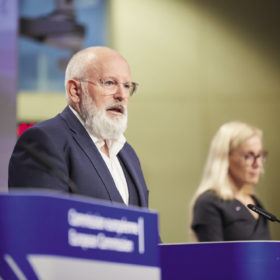
European Commission proposes minimum sustainability thresholds for batteries
The world’s second largest battery market is mulling strict regulation of what type of products can be sold within it. The bloc wants to tighten rules on using hazardous materials and would encourage circular economy approaches. The scope of the commission’s proposal would also affect the design of devices, with phones, laptops and other portable gadgets without removable batteries set to be prohibited.

Italy’s 2050 decarbonization plan needs 6 GW of new PV capacity annually
A recent forum held by Italian trade body Italia Solare has shown that Italy needs to streamline its large scale PV sector if it wants to reach its energy and decarbonization targets.
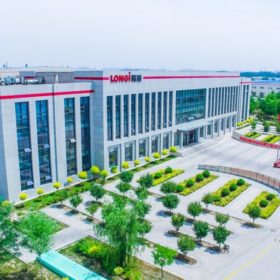
Chinese polysilicon makers driving industry’s second great consolidation
The 275,000 metric tons of annual polysilicon production facilities pushed out of the industry by the expansion of big Chinese producers is more than double the capacity lost in the last great poly market shake-out, between 2010 and 2013.
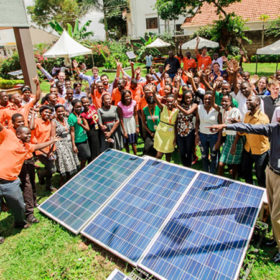
African Development Bank opens $50-60m pot for off-grid solar Covid recovery
The development lender has established a Covid-19 Off-Grid Recovery Platform with impact investors from the Netherlands, U.S. and U.K., to offer affordable loans to off-grid solar companies operating in Africa.
Offshore floating PV may reach maturity in 2030
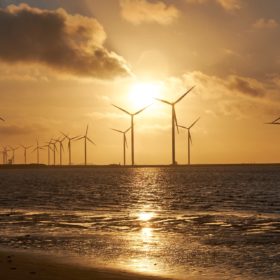
According to a report from DNV GL, the North Sea may host around 100 MW of floating solar capacity by 2030, and 500 MW by 2035. The LCOE of offshore PV systems is currently estimated at around €354/MWh but in the future it should be close to that of ground-mounted solar parks.
