
Draghi must deliver on promises to simplify Italian solar permits
The current planning regulations would mean Italy not hitting its 2030 climate change targets for another 70 years and clean energy trade bodies say the Simplification Decree being debated in parliament – which was drafted to secure €191 billion of EU cash and loans – does not go far enough.

The prospects for solar in a 1.5C world
We will need 10.7 TW of clean energy generation capacity this decade to stay on track with the most ambitious of the climate change paths agreed in Paris, which would include plenty of solar investment and jobs, according to the International Renewable Energy Agency.
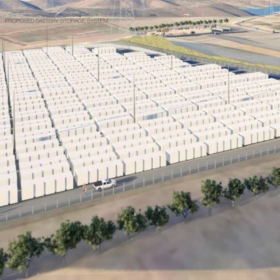
Maoneng planning 225 MW/450 MWh big battery in Australia
Maoneng has revealed plans to build a 225 MW/450 MWh utility-scale storage system in South Australia.
The weekend read: Probes confront EU renewable energy market barriers
The European Commission’s antitrust investigation into EPEX Spot has revealed barriers for the integration of renewables in wholesale power markets. Challenges appear in a range of European marketplaces, but investigations and reforms appear to be clearing barriers to entry.
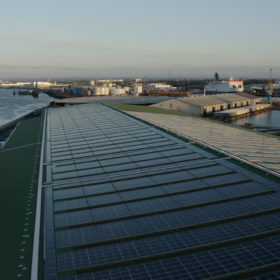
China set to mandate solar on at least 20% of residential roofs in pilot counties
State body the NEA has given its provincial offices until July 15th to suggest counties where a solar mandate – which rises to at least half of all government roofspace – can be rolled out. Selected companies will be awarded whole-county contracts.
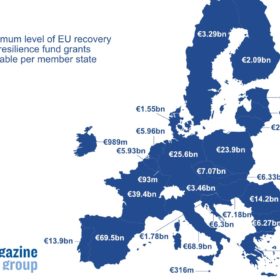
EU raises another €15bn for Covid-recovery effort
The bloc’s latest two bonds were oversubscribed more than 11 times yesterday as the European Commission announced the results of a second fundraising round which already puts the EU almost halfway to the €80 billion it intends to generate through such instruments this year.
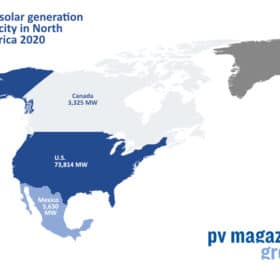
Electrification could drive 51 GW of solar in Canada by 2050
And that figure is based on a less ambitious climate change policy than the one Ottawa has committed to since the North American Renewable Integration Study started, in 2018.
New renewables cheaper than legacy coal or gas for almost half the world’s population
Electricity bill payers in nations as diverse as Germany, Greece, India and China should be aware new solar projects can now generate electricity cheaper for them than legacy coal and gas-fired plants.
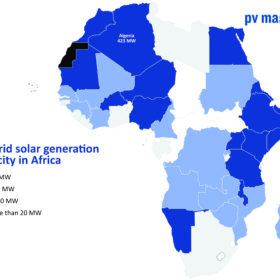
East African renewables developers and investors need matchmaking
Lack of grid capacity and renewable energy institutions are a common lament in sub-Saharan Africa but there is no lack of cash to invest, nor eligible projects in East Africa, as a recent event heard; the problem lies in marrying the two.

GCL sells another 380 MW of solar parks to State Power Investment Corp
With trading in its Hong Kong-listed stock still suspended, the project development arm of the polysilicon manufacturer has continued its drive to sell down its portfolio to state-owned institutions.
