Bangladesh to assess impact of integrating renewables into grid
The government has set a very low bar of achieving just 10% of its electricity supply from renewables as it tenders for consultants to advise it on how to incorporate intermittent generation into the national grid.

German customs authorities accuse IBC Solar of smuggling Chinese PV modules
Investigators have accused the Bad Staffelstein-based business of having purchased incorrectly-declared modules from China and evading around €23 million in import duties. The company’s head office and the private apartments of board members have been searched.

Estonia launches competitive renewables auctions
With the market all but grinding to a halt this year after an incentive scheme expired, the government has launched a new capacity procurement system. PV could be a winner in the first auction round but, as of 2021, solar could face stiff competition from wind and biomass.
China reportedly ready to end large scale PV subsidies this year
Having envisioned an 18-month transition to grid parity solar in the world’s biggest PV marketplace, developers of large scale projects are now reportedly being told the subsidy taps will be switched off at the end of December.

Solar and wind offer safest route to decarbonized electricity mix
The mature renewable energies are the most efficient power resources to slow down global warming and reduce human health impacts, according to a new study published in Nature Communications. The authors claim renewable energy generation capacity is also the best way to reduce land use, toxicity and drinking water depletion.

Panda Green shareholders to vote on latest $225m state bail-out plan
It is back to the meeting room for beleaguered shareholders in the debt-saddled solar project developer, ahead of a proposed shares purchase by a Chinese coal and real estate company.
China walks away from state bail-out of GCL solar project business
The proposed acquisition of a controlling stake in the heavily-indebted PV project business of solar manufacturer GCL-Poly has fallen through, with state-owned China Hua Neng now proposing to cherry-pick the more attractive assets from the unit’s 7 GW portfolio.
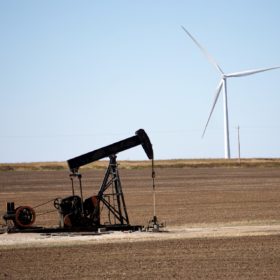
Fossil fuel dependence and poor governance? Fasten your seatbelts
A study of the after-effects of the energy transition has assessed 156 nations and ranked a surprising winner. Here, energy expert Indra Overland discusses the findings of the GeGaLo Index as part of our interview examining renewables and geopolitics.
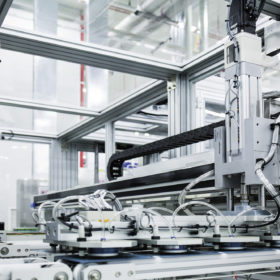
South Korea’s roadmap to drive down solar costs
The government has unveiled a plan to help the PV industry reduce the cost of solar panels from around $0.23/W to $0.10/W by 2030. The plan also aims to reach module efficiencies of around 24% – up to 35% for multi-junction cells – by the end of the next decade.

Chile to hold new energy auction in June
According to the bidding terms published by the National Energy Commission, project proposals may be submitted by June 11 and the results will be announced on June 19. Successful bidders will secure a 15-year power supply deal and some 5.6 TWh of electricity is expected to be generated annually as a result of the new capacity.
