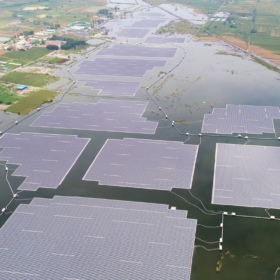
Belgium: Flemish government grants feed-in premium of €0.078 to megawatt-scale floating project
The electricity produced by the floating array will power the Cable Park aquatic park, with surplus power injected into the grid. The project is part of a series of floating plants the Flemish government has been supporting since October.

Transformation of support system for renewables following introduction of renewable energy auctions in Ukraine
Following the adoption of the Law of Ukraine “On the Electricity Market” (the Electricity Market Law) in 2017, which set out the legal framework for the new electricity market design and the role of renewables within it, the renewable energy sector has been developing rapidly in Ukraine.
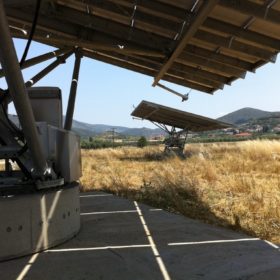
More than 6 GW worth of new PV seeking generation licenses in Greece
The country’s PV market has heated up, a fact reflected by the number of applications submitted to the energy regulator seeking a license to generate electricity.

One Belt, One Road, lots more GCL sales
The chairman of GCL System says Beijing’s pan Asian-African-European infrastructure initiative is helping the company reduce its dependence on its domestic market.

Australia election: What can solar expect under Morrison’s coalition?
As India awaits the results of the world’s largest democratic election on Thursday, and the EU begins to go to the polls on the same day, pv magazine Australia considers the “miracle” victory by a right-wing Liberal-National coalition in Australia at the weekend, and finds the nation’s solar sector has little reason to rejoice.
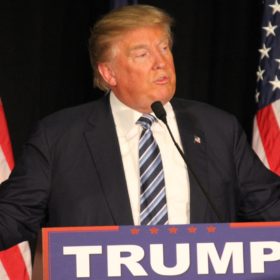
Little benefit to US solar as Trump lifts Canadian steel and aluminum tariffs
While the lifting of any tariffs is welcome news to the U.S. solar industry, manufacturers say low materials prices are unlikely to return as long as protectionist measures elsewhere remain in place.

Bangladesh considers funding for solar home system expansion
The body responsible for the installation of more than 4 million residential PV installations has asked its government masters to provide interest-free financing for its program and Dhaka is considering the proposal.
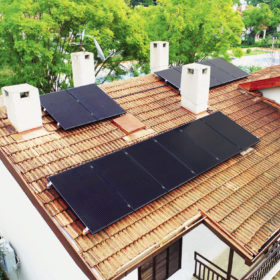
Turkey introduces net metering for residential PV and new rules for unlicensed solar
The government has finally issued a net metering scheme for solar systems not exceeding 10 kW of generation capacity – the country’s first attempt to support small scale PV. New rules for larger, unlicensed projects have also been introduced, with the size limit for eligible systems raised to 5 MW.
SEIA’s solar+ plan falls short on ambition
The Solar Energy Industries Association’s “ambitious goal” of solar supplying 20% of U.S. electricity in 2030 looks more like a forecast, and vision for rapid decarbonization is coming from the climate movement and the American Left, not SEIA.
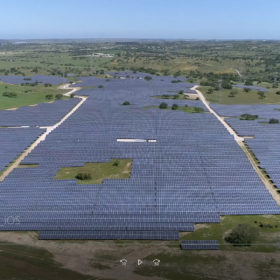
Legislative amendments pave way for Portugal’s 1.35 GW solar auction
The Portuguese government has approved legislative amendments that it says will facilitate its plans to auction off 1.35 GW of solar capacity this summer. The Portuguese energy minister, meanwhile, said that the government hopes to see €6 billion of investment in solar by 2030.
