
IHS Markit at SNEC: Grid parity within reach in China
At their 2018 PV Market Workshop, across the street from the massive SNEC solar exhibition in Shanghai, IHS Markit offered interesting insights into the further development of China’s PV and energy storage markets, as well as the global PV market as a whole.
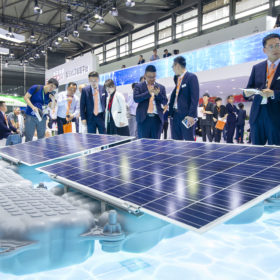
Record-breaking SNEC in Shanghai
The annual SNEC photovoltaic power expo 2018, in Shanghai, closed yesterday after the 12th edition of the world’s biggest PV exhibition. Reflecting the rapid development of China’s PV industry, the scale of SNEC increased from 15,000 sqm at the first exhibition to 180,000 sqm last year and 200,000 this year – a 10% year-on-year increase. Preliminary figures show more than 220,000 visits to this year’s edition, with more than 5,000 industry professionals attending the expo and series of high-level conferences.

Tunisia tenders another 70 MW of solar
After closing its first 70 MW tender in early May, and launching the pre-qualification process for a new 500 MW PV tender a week later, the Tunisian government has announced it is tendering a second 70 MW series for solar projects up to 10 MW in size.
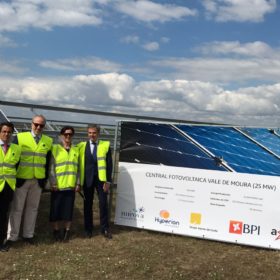
Construction begins on Portugal’s first unsubsidized solar park
The Vale de Moura scheme – backed by French investment firm Natixis – will sell electricity to Axpo Ibéria under a 10-year PPA
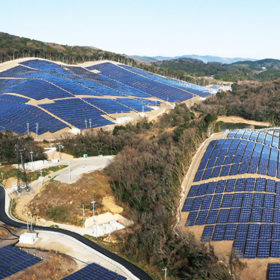
Hanwha Q Cells opening 1.6 GW-plus module assembly facility in the US
The South Korean group will start construction of the factory, in Whitfield County, Georgia, this year, with completion slated for 2019

More solar in Algeria – but petrochem will dominate for 100 years
Announcement of intent to deploy solar will not supplant the importance of fossil fuels to Algerian economy, states Sonatrach chief
Lithuanian utility aims for 1.2 GW of PV
Utility-scale PV is part of the state-run company’s new strategy to raise renewable power production. Lietuvos Energija wants 3 GW of renewable assets in Lithuania and abroad by 2030
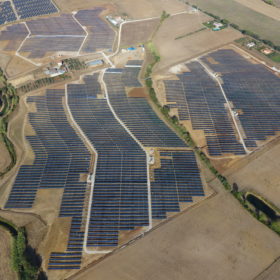
Italy’s digital platform to monitor solar parks
Through the Piattaforma Performance Impianti, developed by energy agency GSE, owners of PV plants above 1 MW in size will be able to conduct geo-analytical comparative analysis between projects while visualizing performance levels and sharing best practice

US Senate proposes business-as-usual energy budget
The upper chamber of Congress has called for stable funding for the Department of Energy’s Office of Energy Efficiency and Renewable Energy in 2019, with an emphasis on electric vehicles as well as increasing the budget for ARPA-E by 6.5%

Elgin Energy to build 50 MW PV project in Scotland
British developer Elgin Energy has received approval from the Scottish government for a scheme it says will be Scotland’s largest solar plant. The site for the project is a former RAF airfield near the town of Elgin, in northern Scotland
