
‘Like many people, I’ve been the only woman in the room’
This week Women in Solar+ Europe gives voice to Charmaine Coutinho, Director – EMEA Energy Transition at UK-based FTI Consulting. She says the energy transition requires inclusive systems that actively involve underrepresented groups, ensuring diversity and equity at all levels. Drawing on decades in the sector, she emphasizes intentional mentorship, sponsorship, and transparent leadership as essential for meaningful change and career impact.
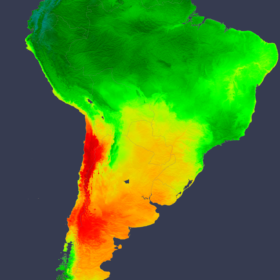
Tropical downpours cut northern irradiance as southern heat lifts sunshine in South America
In a new weekly update for pv magazine, Solcast, a DNV company, reports that January in South America featured dramatic weather contrasts with persistent floods and cloud cover in northern regions sharply reducing solar irradiance, while extreme heat, drought and wildfires in the south boosted sunlight yet also generated aerosol smoke that complicated irradiance outcomes. Severe storms, tornadoes and industrial fires further punctuated the month’s highly variable irradiance patterns across the continent.

FOB China TOPCon solar cell prices hold steady as market awaits post-holiday reassessment
In a new weekly update for pv magazine, OPIS, a Dow Jones company, provides a quick look at the main price trends in the global PV industry.
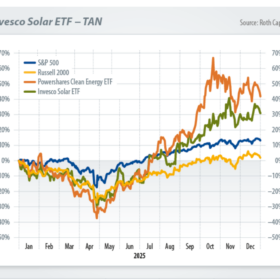
The future of solar is unwritten
Whatever decision the U.S. Department of Commerce makes on polysilicon imports, some market segments are in for a bumpy ride in 2026 as the expiration of tax credits and other policy levers change the trading environment faced by residential installers and others. Jesse Pichel and Lev Seleznov of Roth Capital assess what lies ahead for U.S. solar.

Standardizing smart energy requirements
A systems approach is essential for smart energy standardization, ensuring interoperability, avoiding overlaps, and addressing complex interactions across the grid, appliances, and infrastructures. The IEC System Committee for Smart Energy (SyC SE) applies system-level thinking, using tools like reference architectures and roadmaps to coordinate standards, support innovation, and tackle emerging areas such as EV integration, digital twins, and zero-emission technologies.

Solar electricity during night-time
Night-time in solar PV systems averages 16 hours, requiring significant storage or alternative generation to meet demand. Pumped hydro and batteries are key, with pumped hydro offering long-duration, low-cost storage for cloudy or windless periods. Complementary strategies include wind power, load shifting, and dispatchable generation, while high solar and wind penetration reshapes grid operations and pricing.

South Africa’s solar industry must ‘focus on execution’
With South Africa’s solar industry moving toward a phase of market-led growth, Sim Khuluse, from the South African Photovoltaic Industry Association (SAPVIA), says the challenge for the forthcoming year is moving ahead with grid modernization and expansion.
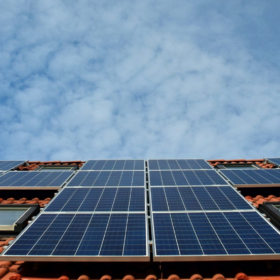
Rethinking module geometry to expand rooftop solar capacity
Rethinking module geometry beyond the traditional rectangle could increase rooftop PV capacity on irregular buildings by improving packing efficiency and expanding placement options.

Solar module prices rise faster than expected in February
Solar module prices increased by €0.01 ($ 0.012)/W to €0.015/W in February, lifting levels 15% to 18% above the December 2024 low despite falling wafer costs, as manufacturers seek to restore margins after prolonged losses.
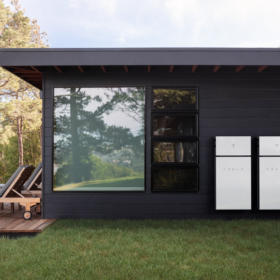
Home batteries reshape Australia’s national electricity market
Small-scale behind-the-meter storage is beginning to reshape peak demand in the Australian National Electricity Market (NEM), raising the prospect of a “Bactrian camel curve” in which evening load is split. Within six months of Australia’s Cheaper Home Batteries Program, small-scale storage capacity could supply up to half the peak output of the Eraring coal-fired power station.
