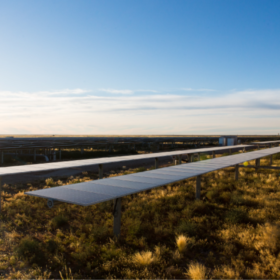
Reports of backsheet failures at 75 MW Mulilo Sonnedix Prieska solar farm in South Africa
The South African project is reportedly experiencing serious problems due to premature module degradation. Claims of extensive backsheet failure have emerged and it is said widespread module replacement will be required. The modules used in the project were supplied by Chinese manufacturer BYD and South African producer Artsolar.
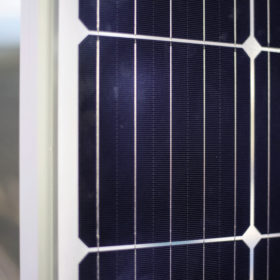
Preventing LID in a 23.83% efficient Longi PERC cell
Australian researchers have unveiled hydrogenation technology to reduce light and elevated temperature-induced degradation in Czochralski silicon PERC solar cells. The developers say the process can minimize degradation without sacrificing performance in cells and modules.

Solar NGO Electriciens sans frontières awarded Zayed energy prize
The French non-governmental organization, which provides solar kits to refugee camps and disaster affected communities, won the energy category of the 12th Zayed Sustainability Prize. The award will bank Electriciens sans frontières $600,000.
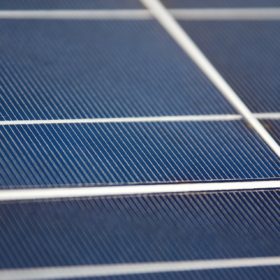
UK researchers confirm correlation between micro-cracks and hot spots in polycrystalline cells
A research team from the University of Huddersfield used electron microscopy to analyze micro-cracks in 4,000 polycrystalline silicon solar cell samples. The results showed power losses may vary from 0.9-42.8%, and increased temperatures due to micro-cracking may favor the formation of permanent hot spots in the cells.
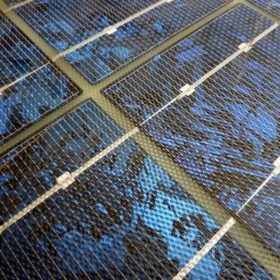
US scientists claim clear-sky irradiance model provides better results for module testing
Researchers at the American Institute of Physics have used the clear-sky irradiance model developed by the National Renewable Energy Laboratory to measure the degradation rates of solar panels at a testing field in Germany over five years. The scientists say the model, when combined with real-world data, offers an efficient tool to evaluate the aging of PV technology.
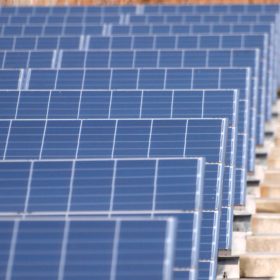
French researchers developing algorithm to identify losses in PV projects
Liten, a research institute of the French Alternative Energies and Atomic Energy Commission, is developing a method of assessing losses at every stage from the reception of solar rays to the injection of electricity into the grid, to ‘make it possible to optimize the maintenance of the power plants to guarantee their performance’.
Chinese recovery will begin before year-end, according to Jinko
The Shanghai solar manufacturer has revealed another set of record-breaking quarterly figures and says it will shift 18-20 GW of modules in 2020, en route to generating revenues of $1.17-1.23 billion.

Bangladesh sets solar import standards
Complaints about sub-standard, cheap PV imports from China – and notably, India – have been heeded by Dhaka, which has issued a requirement for modules, inverters, charge controllers and batteries to attain IEC electrical standards.
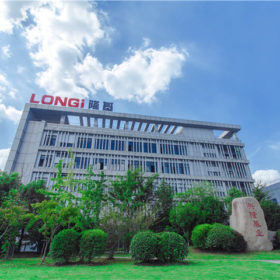
Longi demonstrates 20% bifacial boost
In a white paper published this week, Chinese module maker Longi Solar shares six months of data from a testing site in India that was built in cooperation with German testing institute TÜV Rheinland. The results show energy yield gains of around 20% for both bifacial mono PERC and n-type modules.
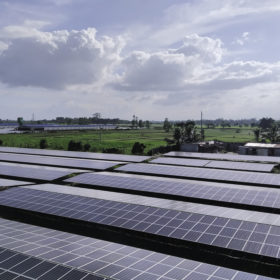
Bangladesh extends incentive scheme for domestic solar industry
PV manufacturers receive 10% of the value of their exported products as an incentive and the nation’s central bank has extended the program to cover this financial year. Bangladesh’s solar manufacturers have called for more, however, and point to more generous schemes to the west.
