
New cooling gel could raise PV module efficiency by 12%
Researchers in Saudi Arabia have developed a hydrogel composite that absorbs moisture in solar modules overnight and facilitates evaporative cooling throughout daylight hours. The system has undergone lab tests and outdoor experiments on two continents.
Module reliability scorecard reveals widespread quality risk
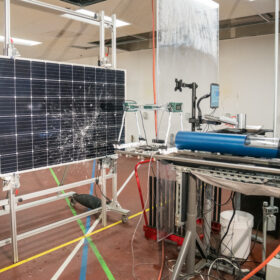
Independent testing laboratory Kiwa-PVEL today published the 11th edition of its PV Module Reliability Scorecard, having extensively tested PV modules from 50 different manufacturers. The scorecard reveals improvements in energy yield per watt-peak and resistance to potential-induced degradation, but an increase in breakage under mechanical stress and hail simulations, and an overall higher failure rate are cause for concern to many.

New method to verify warranty conditions of PV modules
Scientists have developed a way to compare the data given by PV manufacturers based on standard test conditions (STC) to the real conditions in the field. The proposed technique is based on the single-diode model and the Newton-Raphson algorithm. The maximum relative error was found to be at 1.37%.
Three-year field test shows TOPCon, HJT solar module reliability in desert areas
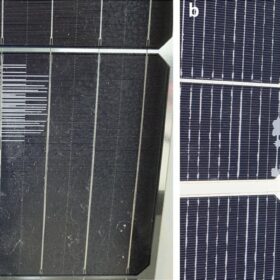
A three-year field experiment comparing the performance and reliability of passivated emitter and rear cell (PERC), tunnel oxide passivated contact (TOPCon), and silicon heterojunction (SHJ) modules in desert climates found that HJT modules exhibited the highest degradation, while TOPCon modules showed the lowest degradation.

New method to optimize bifacial PV system performance in residential applications
Scientists in Qatar have outlined a new approach to optimize residential bifacial PV systems by combining south-facing and vertically mounted east-facing configurations. The novel methodology reportedly results in a 21.6% increase in a system’s net present value.

Turkish sensor maker debuts pyranometer for PV plants
Turkey-based Seven says its new product can measure irradiance in a range of 0 W/m² to 4,000 W/m², with a resolution of 0.1 W/m². It can also measure humidity and temperature.

How to identify interruption of ribbons in solar modules
Scientists in Spain have investigated the total or partial interruptions of ribbons that connect solar cells in modules and have proposed a classification based on their type and location.

New method to predict solar module lifespans under sand erosion
A team of researchers in Algeria has designed a new testbed and a novel acceleration law that accounts for both wind speed and sand density. The new methodology was tested on four PV modules and showed lifespans of up to 47 years in terms of sand impact.
New research shows correlation between PV module electrode corrosion and damp heat test
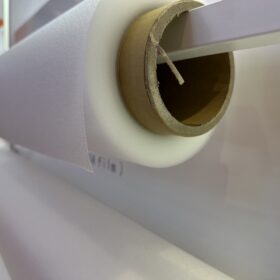
A research group in Japan identified a correlation between damp heat test of 1,000 hours to 3–6 years of field exposure in humid areas and changes in acetic acid concentration in photovoltaic modules. Their analysis also showed that an acetic acid concentration over 10,000 μg/g can be critical.

New study shows reducing number of solar modules per string reduces risk of hotspots
Scientists in Indonesia have investigated early operational defects in a 24.9 MW solar PV system in Sumatra and have identified hotspot formation as the dominant defect. They also detected 282 cases of glass cracking, 350 cases of junction box failures and shading effects linked to module defects.
