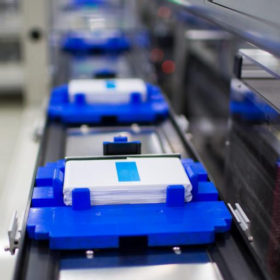
‘China must put EV battery reuse at heart of net-zero ambition’
The centralized nature of policymaking in Beijing would enable component standardization to ease the transition from EV to stationary energy storage use, according to Greenpeace East Asia.

World is set for 3.3C temperature rise, predicts Bloomberg
Although the global solar industry might be cheered by the prospect of a healthy slice of an expected $12 trillion, 30-year windfall, governments are falling far short of steering us clear of catastrophic global heating, according to the analyst’s latest New Energy Outlook report.
Major economies should divert fossil fuel Covid-recovery cash to clean energy before it’s too late
A report by Finnish company Wärtsilä has estimated the potential impact if every dollar committed to a non-renewables energy sector recovery was instead funneled to clean power.

The issues with lithium-ion battery recycling – and how to fix them
Design-for-recycling is not perceived to be high up the list of priorities for battery manufacturers but solutions do exist. Lithium-ion device recycling is technically feasible but requires an improvement in its business case to take off.

South Korea follows Japan with net-zero 2050 pledge
Re-elected South Korean president Moon Jae-in today declared he will follow-up on a campaign trail promise to eliminate carbon emissions by mid century. The announcement comes just two days after Japan’s new prime minister said he would accelerate his nation’s emissions target.
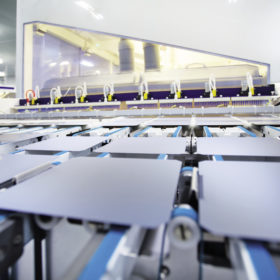
Chinese PV Industry Brief: Stable wafer and cell prices and another 2.2 GW solar-plus-storage project
Solar manufacturers Longi and Tongwei have frozen next month’s prices.
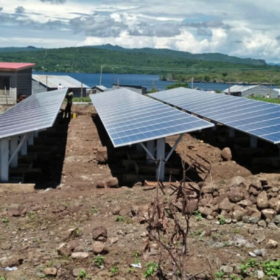
World Bank offers $4.6m credit for off-grid solar panels and cook stoves in Kenya
Part of the development lender’s $150 million Kenya Off-grid Solar Access Program, the money will enable distributors to stock up and establish sales networks as well as offering affordable repayment terms to customers across 14 off-grid counties in the East African nation.
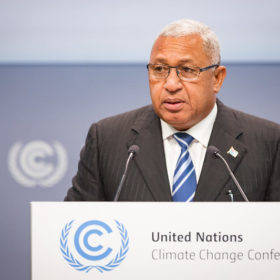
Fiji plans ‘Pacific’s largest solar project’
The island nation has agreed a deal with the World Bank’s International Finance Corporation to develop at least 15 MW of generation capacity in a US$15 million project.
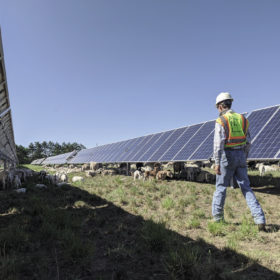
The weekend read: The ground beneath
A number of drivers are highlighting the importance of vegetation management in utility-scale solar projects, from coupling with agriculture to the significance of pollinators, as well as the related permitting and O&M benefits. Tom Karas of Minnesota Native Landscapes sets out why awareness of comprehensive vegetation management is of growing importance in the solar sector.

Sustainable aircraft fuel will need a lot more renewables capacity
A research paper into the prospects of manufacturing ‘power-to-liquid’ kerosene in Germany has concluded the government will end up importing it. Wherever the world’s clean aviation fuels are made, however, it seems a lot of clean power will be needed to drive the production process.
