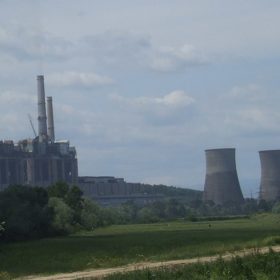
EU energy fund to commit $514 million for solar projects at Romanian mining waste sites
Panels will be installed at waste sites in five mining towns as part of the latest, €2.4 billion ($2.57 million) round of investment from a fund set up to help coal-dependent European member states with the energy transition.
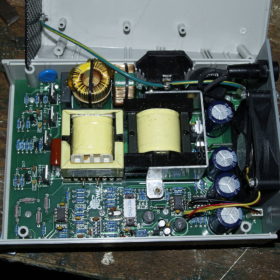
New model for grid-forming inverter operation
Scientists in the United States have developed a new model to allow utilities to use grid-forming inverters in order to better renewable energy intermittency. They described the inverter main circuit representation, the droop control, and the fault current limiting function.
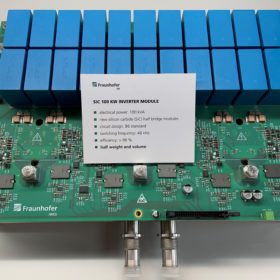
Downsizing gallium nitride inverters
A German consortium led by Fraunhofer IEE aims to bring gallium nitride inverters closer to commercial viability. The primary goal of the research project is the optimization and miniaturization of inverters, including passive components such as cooling systems, casings, and mounting structures.
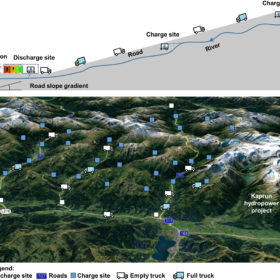
Storing hydropower via regenerative braking in electric trucks
An international research team has proposed the use of water from high-altitude rivers and regenerative braking in electric trucks to store electricity for reuse in power networks, or for transport purposes.
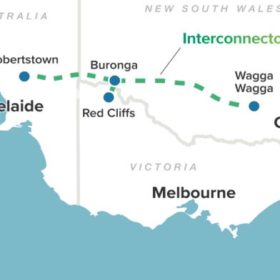
Transgrid builds high-voltage interconnector to link Australian states
Transgrid, the transmission network owner in the Australian state of New South Wales, has started building its section of the AUD 2.3 billion ($1.64 billion) Project EnergyConnect. The high-voltage electricity transmission interconnector will link power grids across three states, unlocking gigawatts of planned renewables.
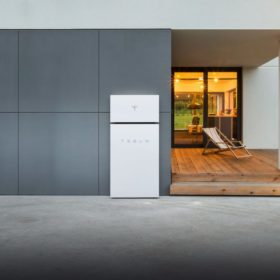
Tesla rallies Powerwall owners to show how they can help Texas grid
In Texas, where batteries cannot send power to the grid, Tesla has filed a request for a rule change and has called on Powerwall owners to form a virtual power plant.
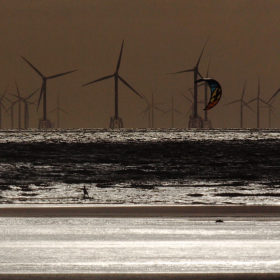
British developer gets green light for 200 MW battery
The Heysham site is intended to reduce curtailment from half a dozen offshore wind farms and to replace local grid services which will be lost when two nearby nuclear reactors are powered down.
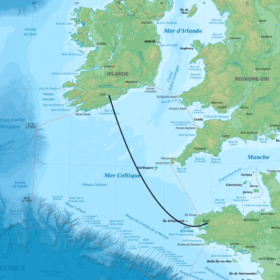
Irish authorities approve subsea power link to France
Ireland has given the green light to install a 700 MW, high-voltage direct current submarine power cable between its southern coast and the northwestern coast of France.
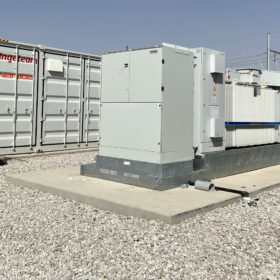
Ingeteam touts Italy’s largest storage system
Spain’s Ingeteam will supply a 70 MW/340 MWh facility based on almost 60 lithium-ion containers to provide storage services to the grid.
How grid-forming inverters may enhance grid synchronization
US researchers have investigated how grid-forming inverters could help to resolve network synchronization issues. They have found that multi-loop devices could offer strong damping support in power systems with intermittent renewables.
