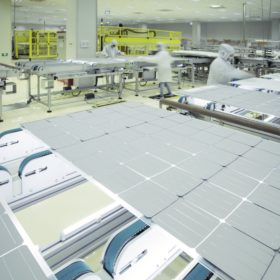
Analyst expects ‘unprecedented’ consolidation of Chinese solar industry
PV manufacturers unable to live with proposed new quality guidelines and project developers alike are set to be squeezed out by the state in the world’s biggest solar market, according to Frank Haugwitz, who has compiled a market update as preparations for the next five-year plan gather pace.
Announcement of solar grid caps in China could mark fightback by network operators
After managing to bear down on costs enough to compete with coal-fired generation, it appears solar developers in China now face a new hurdle to overcome – resistance from grid companies.

Israel wants another 15 GW of solar by 2030
Energy minister Yuval Steinitz has announced the country’s 2030 renewable energy target will rise to 30%, with solar expected to account for the lion’s share. Approximately $23 billion more clean energy investment is envisaged this decade.
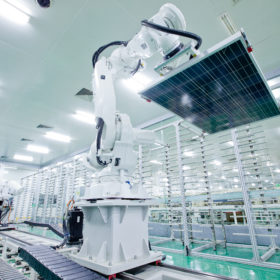
Chinese PV Industry Brief: Jinko’s new capacity and a 200 MW solar park
JinkoSolar has begun construction of a new 16 GW module production base in Yiwu city, Zhejiang province and Eging PV has resumed a 200 MW solar project in Qitai county in the Xinjiang Uygur Autonomous Region, after securing approval from local authorities. The China National Energy Administration has confirmed the nation can add no more than 48.45 GW of solar to the grid this year.
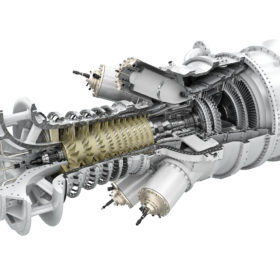
Siemens and Engie plan 12 MW green hydrogen and gas project in France
A €15.2 million power-to-X-to-power hydrogen storage facility is being planned in Saillat-sur-Vienne, in Nouvelle-Aquitaine. The project partners want to use renewable energy from the grid and water to produce and store electrolyzed hydrogen. It would then be mixed with natural gas to power an upgraded, 12 MW Siemens SGT-400 industrial gas turbine which previously generated steam for local manufacturing and would be able to return power to the grid to meet demand.

US renewable energy surpasses coal for the first time in more than a century
The coal era could be said to be officially over in the United States.
Dutch grid operators won’t have to compensate for deactivated solar rooftops
Minister of economic affairs and climate change, Eric Wiebes, has written to parliament to confirm grid companies do not have to pay PV system owners when their installations are disconnected from the network due to capacity issues or poor-quality voltage.

Software developer claims its platform can unlock a distributed generation world
U.K.-based Power Transition today launched a crowdfunding exercise to raise the £300,000 it says it needs to scale up its blockchain-based, peer-to-peer energy trading platform beyond a 47-home demonstration project.
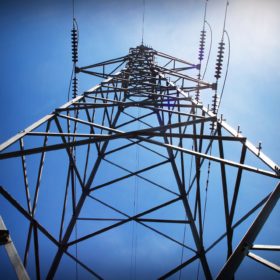
Renewables can avoid crippling LNG and coal subsidy bill for Bangladesh
U.S. thinktank the Institute for Energy Economics and Financial Analysis says the nation should reorder its power network to harness cheap, modular renewables after existing power station overcapacity was worsened by plunging electricity demand during the Covid-19 shutdown.
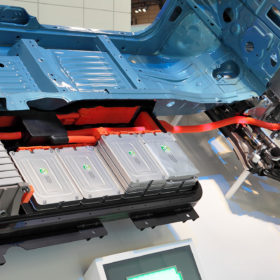
Used EV batteries for large scale solar energy storage
MIT scientists have suggested used electric vehicle batteries could offer a more viable business case than purpose-built systems for the storage of grid scale solar power in California. Such ‘second life’ EV batteries, may cost only 60% of their original purchase price to deploy and can be effectively aggregated for industrial scale storage even if they have declined to 80% of their original capacity.
