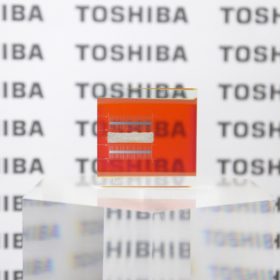
Toshiba raises efficiency of transparent cuprous oxide solar cell from 8.4% to 9.5%
Toshiba has revealed that it has improved the power conversion efficiency of a transparent cuprous oxide solar cell to 9.5%, from the 8.4% mark it reached in December 2021. It enlarged the cell and suppressed carrier recombination at the edge of the cuprous oxide (Cu2O) generation layer, which usually causes generation efficiency degradation.
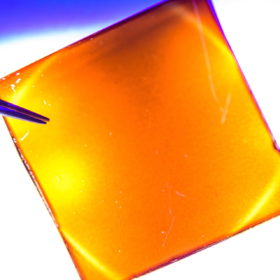
New way to produce 3D/2D bilayer perovskite solar cells with 24.5% efficiency
US researchers have discovered an appropriate solvent design for the application of a 2D top layer on a perovskite solar cell. The cells incorporate the stability of 2D perovskite cells and the efficiency of 3D cells without destroying the 3D bottom layer, which brings them closer to commercialization.
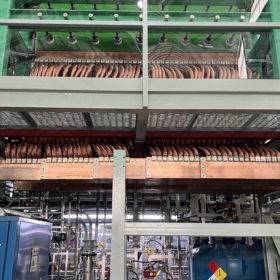
Verdagy hits LCOH below $3.00/kg with commercial AEM electrolyzer module
Verdagy has reported a levelized cost of green hydrogen (LCOH) below $3.00/kg for its anion exchange membrane (AEM). The California-based company said it can now launch commercial operations.

Polar Developments launches portable, 84 kWp solar array
Polar Developments revealed its new scalable PV array at the recent AUTOPIA event in Spain.

Jakson reveals plans to manufacture solar cells, electrolyzers
India’s Jakson Green will expand its solar module and cell manufacturing capacity to 2 GW by the end of 2024, CEO Bikesh Ogra told pv magazine this week at the Renewable Energy India Expo 2022. He said the company also has aggressive plans for green hydrogen and ammonia, with a specific focus on distributed generation.
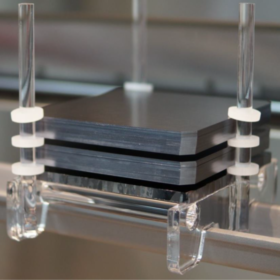
New production process could double wafer throughput to up to 20,000 per hour
Scientists from Germany’s Fraunhofer ISE – together with a consortium of plant manufacturers, metrology companies, and research institutions – have developed a new production line concept for high-efficiency silicon cells, with a throughput of 15,000 to 20,000 wafers per hour – roughly double the usual amount.
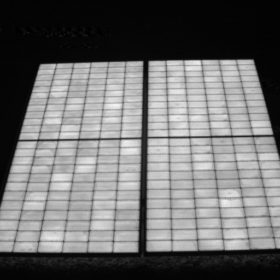
New electroluminescence tech for daily solar module inspections
Enertis Applus+ and the GdS Optronlab Group have developed a system to enable daytime electroluminescence in the inspection of PV modules.

Hithium unveils 300 Ah battery for rooftop PV applications
Hithium’s new battery has an energy efficiency of 95% and an energy density of 170 Wh/kg. It can purportedly operate for more than 12,000 cycles.
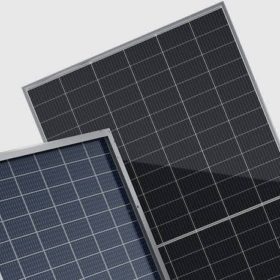
Credence Solar unveils 670 W bifacial solar modules
India’s Credence Solar has unveiled the Quasar-Bi line of bifacial PV modules, with power outputs ranging between 650 W and 670 W. The panels are built with 132 mono PERC half cells and 12 busbars.
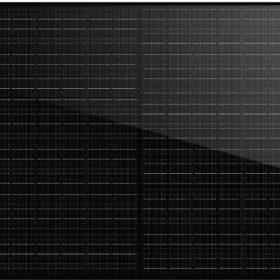
Longi announces new 415 W solar panel for residential, commercial applications
Longi unveiled a new 54-cell module at RE+ Anaheim last week, with outputs ranging up to 415 W, and an efficiency rating of 21.3%.
