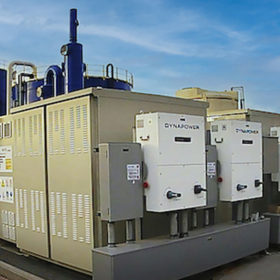
Underwriters Laboratories to assess Redflow’s redox flow batteries
Underwriters Laboratories, a US non-profit standards development organization, will carry out research into the operating and safety profile of Redflow’s redox flow batteries under nominal and off-nominal conditions.

Solar module anti-soiling coating for retrofit application
Dutch company Rads Global Business has developed an anti-soiling coating for solar PV modules that are at least two years old. The new product is claimed to increase power yield by up to 7% and to have a payback time of 2.5 to four years depending on the dust level of the site.

Green hydrogen, blue hydrogen to reach cost parity in Europe by 2030
The direct coupling of electrolyzers with PV and wind power systems will become the cheapest forms of energy in many parts of Europe, according to Aurora Energy Research.

‘The major solar players will shift from PERC to TOPCon’
US analyst Clean Energy Associates made some notable predictions in its Q4 survey of the world solar manufacturing market, including echoing predictions made elsewhere that the new polysilicon production capacity coming online now will help arrest the spike in solar panel prices.
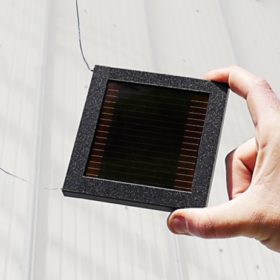
Mini perovskite solar module with 40 sq cm aperture area, 17% efficiency
The 19.2%-efficient perovskite cells used in the module rely on an electron layer based on tin oxide that was deposited via chemical bath deposition. This technique, according to the device’s creators, has made it possible to have a relatively small drop in efficiency from small cells to the 40cm2 module.

Wireless EV charging coming soon to US market
WiTricity has unveiled plans to develop wireless charging stations for select electric vehicle models.

The Hydrogen Stream: Airbus plans flight test with direct combustion engine fueled by hydrogen
Elsewhere, Chinese researchers have synthesized ultrafine Pd100-xCux nanodot-modified TiO2 photocatalysts that display optimized energy barrier for interfacial hydrogen desertion, which reportedly exhibits excellent H2-evolution activity and stability, and Mitsubishi Heavy Industries has presented its plans to establish the Takasago Hydrogen Park, calling it the world’s first center for validation of hydrogen-related technologies, from hydrogen production to power generation.
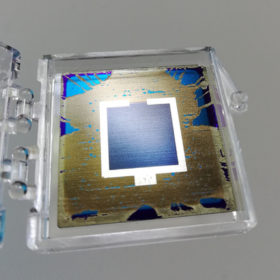
First attempt to build tandem perovskite-PERC/POLO solar cells achieves 21.3% efficiency
The tandem cell was fabricated by German scientists through a process flow that is compatible with industrial, mainstream PERC technologies. According to its creators, the device has the potential to exceed efficiencies of over 29% with adjustments in the perovskite thickness and bandgap.

Bifacial TOPCon solar cell with 23.84% efficiency, 90% lower silver consumption
Developed by Germany’s Fraunhofer ISE, the cell is manufactured with metallization based on a plating process. The device was built with galvanic nickel/copper/silver contacts instead of common silver contacts.

New flexible solar module factory begins operations in the UK
Operated by UK start-up Power Roll, the pilot factory will reach a capacity of 30 MW by year end. The manufacturer uses low-cost roll-to-roll manufacturing processes and patented microgroove patterns to produce flexible solar panels intended for applications on warehouses and agricultural sheds whose roofs are not strong enough for conventional arrays as well as in vehicle-integrated photovoltaics.
