
The Hydrogen Stream: International alliances for hydrogen keep proliferating
This week, Russia joined forces with the United Arab Emirates to develop common hydrogen projects and similar moves were made by Chile and South Korea, Japan and Australia, as well as by France and Germany. French President Emmanuel Macron announced €2 billion in new investments.

Panasonic launches new Evervolt battery
Panasonic said the system is available in the U.S. with storage capacities of 17.1 kWh and 25.65 kWh. The product comes with a floor-standing battery cabinet and a hybrid smart inverter with 4 MPPTs.

Solitek unveils 12.6%-efficient solar panel for greenhouses
The frameless solar panel has a light transmittance of 40% and nominal power of 235 W. The manufacturer offers a 30-year performance guarantee.
BIPV modules from Estonia
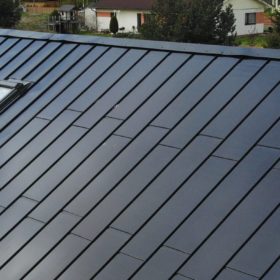
Estonian start-up Roofit.solar recently raised €6.4 million from a group of investors led by Germany’s Baywa r.e. The company will use the funds to commercialize its three BIPV modules with power outputs of 110 to 160 W. All products rely on a 0.5 mm metal back sheet with highly durable pural coating.
Talesun: Focus on solar tech and product innovation to survive
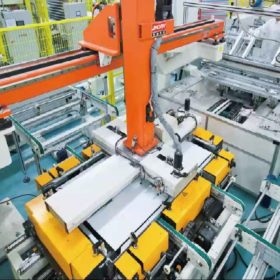
Several black swans have been circling over this year’s solar PV industry: rising raw material and product prices; supply chain issues and international logistics holdups; and power shortages in China, to name but the most disruptive. How is it possible for solar companies to survive under these conditions? According to Dong Shuguang, a PV veteran and President of Talesun Solar, they must focus on solar technologies like PERC, TOPCon and HJT, and product innovations that provide customer value.
Proposal to move from net metering to storage in the Netherlands
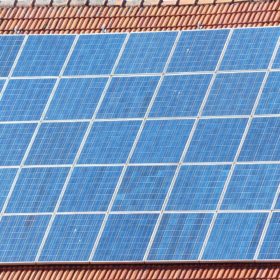
The Netherlands storage industry association and the Dutch grid operators have proposed a faster phasing out of the net metering scheme to enable wider adoption of batteries among PV system owners. A 30% rebate on the purchase and installation of residential storage systems could help achieve the plan.
Shingled solar modules and shading
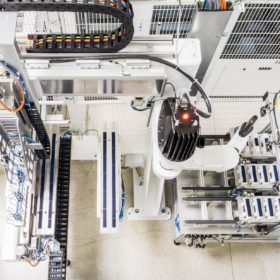
Scientists at Germany’s Fraunhofer Insititute for Solar Energy Systems (ISE) evaluated the performance of its newly introduced ‘Matrix’ approach to interconnecting shingled solar cells. The institute finds that, thanks to optimized current flows, energy yield of the Matrix approach could almost double that of standard shingled cell interconnection under random shading conditions.
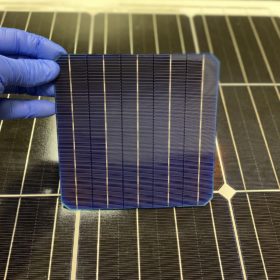
Novel solar cell architecture to reduce silver costs, improve voltage
Developed by a U.S.-based start-up, the new manufacturing process is claimed to reduce silver consumption and improve solar module performance by up to 3 W. It consists of connecting sub-cells in series within a single cell in order to increase the device voltage and without requiring cells to be physically broken and rewired.
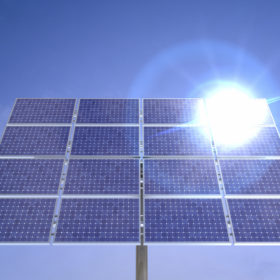
A hybrid wind-solar-biogas sytem design including battery and thermal storage from PV modules’ excess heat
Tested in an off-grid location in India, the proposed approach includes the use of thermal storage from PV modules’ excess heat for space and water heating. The optimum configuration for the system was given by the combination of a 224 kW PV system equipped with a phase change material, a 206 kW wind turbine, a 420 kW biogas generator, a 633 Ah battery, and a 170 kW converter.
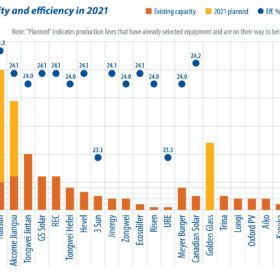
Looking past PERC solar cells
While the adoption of large-format wafers has driven a wave of capacity expansion for PERC, existing manufacturers and new entrants continue to evaluate TOPCon and HJT. An increasing number of HJT pilot lines and gigawatt-scale capacity expansion projects are appearing, as manufacturers see the advantages of fewer process steps, higher efficiency ratings, and better yield rates. The localization of equipment is also a driving factor. PV InfoLink’s Derek Zhao offers an update on the latest developments and process routes for HJT.
