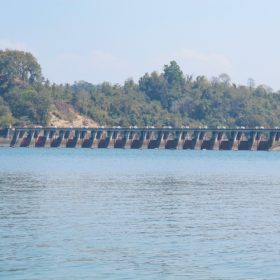
Combining big floating solar with hydropower
Scientists in Bangladesh have evaluated how a 50 MW floating PV plant could be integrated with the 230 MW Karnafuli Hydroelectric Power Station, located at the Kaptai Dam on the Karnaphuli River. They found that the two energy sources can be perfectly optimized and that PV can compensate for the reservoir’s shortage of water storage during the winter season while hydropower can compensate for the poor yields of the floating array during the monsoon season.

The world’s hottest heat pump
A Norwegian consortium has built an industrial heat pump that can reach a temperature of up to 180 degrees Celsius. The machine can be used with different industrial processes that rely on steam as an energy carrier and can reduce a facility’s energy consumption by between 40% and 70%, as it enables the recovery of low-temperature waste heat.
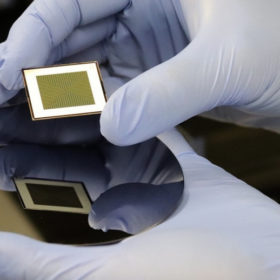
Australian researchers develop bifacial solar cell with 96.3% bifacial factor
Australian National University researchers claim to have set a world record for bifacial solar cell efficiency that they say could boost the energy output of solar farms by 30%.
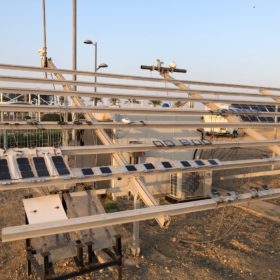
Tracing the roots of fill factor degradation in perovskite-silicon tandem solar cells
Scientists in Saudi Arabia have conducted one of the longest tests on the stability of perovskite-silicon tandem solar cells. According to their findings, the most affected parameter under the hot and humid climate of the region is the device fill factor, which dropped from 80% to 50% in just six months.
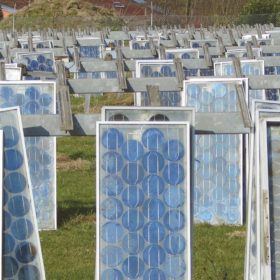
Blockchain for PV module recycling
Next Energy and Marubeni are developing a blockchain tech for PV module inspection – with the support of the Japanese government – which they claim is able to provide data on a panel’s traceability and components as well as verifying that the data were not modified or tampered with.

Dubai project promises ‘customized, walkable’ building PV
The new headquarters planned by DEWA is intended to consume no more annual electricity than it generates, from a large volume of rooftop and building-integrated PV.
Novel salt solution for lithium-ion battery fires
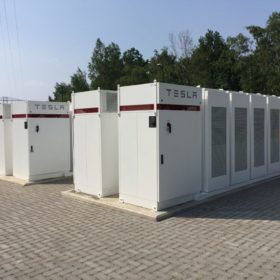
Australian researchers have tested a novel lithium salt for high-voltage lithium batteries in electric vehicles and grid-scale storage systems. They claim the salt is less hazardous than conventional battery materials.

The Hydrogen Stream: big push from UK, European Union
U.K. business and energy secretary Kwasi Kwarteng has unveiled a new hydrogen strategy aiming at developing both the green and blue forms of the fuel. Furthermore, Thierry Breton, the EU commissioner for the internal market, has said Europe needs to increase its commitment to hydrogen and use nuclear to produce a decarbonized form of the gas.
Cooling PV modules with plants, coir pith
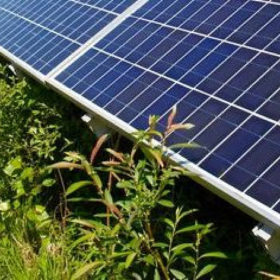
An Indian-Malaysian research group has investigated the effectiveness of several passive cooling techniques for solar panels, including the placement of plants around the modules or coir pith underneath them, both of which, surprisingly, offered good performance in terms of temperature reduction and power yield.

New PV facade design in Sweden
Soltech Energy has installed a 60 kW solar facade on the wall of a garage in Sweden that hosts 300 EV-charging posts. It features a steel structure to facilitate the flow of air.
