
Air source heat pumps raise home prices
According to a recent study, installing an air source heat pump may increase a home’s value by up to 7.1% in 23 states of the United States. The price premium is estimated at between $10,400 and $17,000 per transaction and the average cost for installing an air source heat pump is around $8,000.
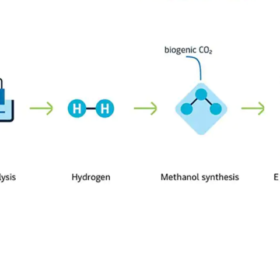
The Hydrogen Stream: First vessel to operate on solar-powered methanol in Denmark, giant green hydrogen project in China
Energy storage and clean fuel company ITM Power also opened a 1 GW electrolyzer factory in the United Kingdom and South Korea’s automobile parts maker Hyundai Mobis is investing US$1.1 billion in two hydrogen fuel-cell plants in its home country.

Conical roof equipped with solar tiles
The solar tiles were deployed on a conference center in Glücksburg, Germany. In addition to PV, the building also uses solar thermal energy and biomass to cover heat demand. The power generated by the PV array is utilized entirely for self-consumption.
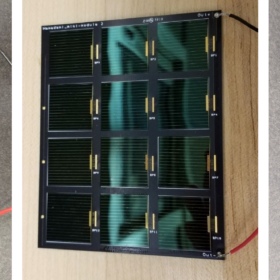
The best PV tech for Internet-of-Things devices
U.S. scientists have evaluated three different PV technologies – GaInP, GaAs, and silicon – for powering wireless temperature sensors. They found that the silicon solar module offers the lowest performance and also suggested its use may be applied to low-demand devices.
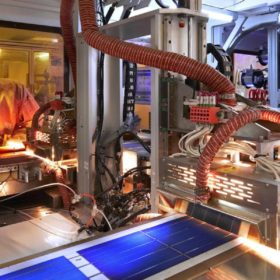
Trina Solar improves efficiency of 210 mm PERC solar cell by 0.5%
The cell has achieved a power conversion efficiency of 23.5%. The result was confirmed by China’s National Center of Supervision and Inspection on Solar Photovoltaic Product Quality (CPVT).

Ultra-lightweight CIGS solar module for high altitude airship applications
The 25 W solar panel has been designed to operate at air mass zero (AM0), which is the standard spectrum outside the Earth’s atmosphere. According to the PV manufacturer, the module has a weight of just 82 grams, while a small 300 W array comprised of these panels would weigh in at around 1 kg.
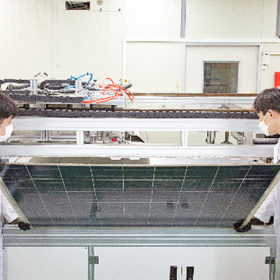
Novel PV module recycling tech from South Korea
Developed by the Korea Institute of Energy Research (KIER), the “non-destructive” technology is claimed to enable the recovery of 100% of a module’s glass and to allow the reuse of silicon for producing new solar cells with an efficiency of 20.05%.

Combining big floating solar with hydropower
Scientists in Bangladesh have evaluated how a 50 MW floating PV plant could be integrated with the 230 MW Karnafuli Hydroelectric Power Station, located at the Kaptai Dam on the Karnaphuli River. They found that the two energy sources can be perfectly optimized and that PV can compensate for the reservoir’s shortage of water storage during the winter season while hydropower can compensate for the poor yields of the floating array during the monsoon season.

The world’s hottest heat pump
A Norwegian consortium has built an industrial heat pump that can reach a temperature of up to 180 degrees Celsius. The machine can be used with different industrial processes that rely on steam as an energy carrier and can reduce a facility’s energy consumption by between 40% and 70%, as it enables the recovery of low-temperature waste heat.

Australian researchers develop bifacial solar cell with 96.3% bifacial factor
Australian National University researchers claim to have set a world record for bifacial solar cell efficiency that they say could boost the energy output of solar farms by 30%.
