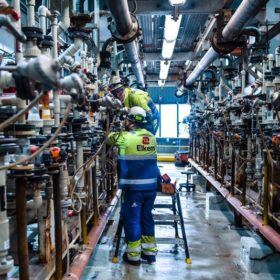
Europe had just 650 MW of solar cell manufacturing capacity at the end of 2020
The latest update to the Photovoltaics Report produced by research organization the Fraunhofer ISE has offered up the usual slew of interesting stats on the state of solar across the continent.

Maxeon secures EU cash to make its ‘stick-on’ solar panels in France
The TotalEnergies-controlled solar manufacturer will secure an, as yet undetermined chunk of a new €118.6 million low-carbon innovation fund to start producing its frameless, glass-free solar roofing products at Porcelette, in northeastern France.
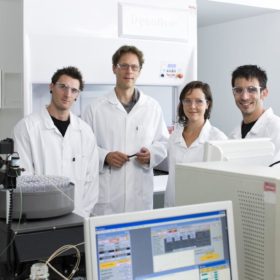
Aussie startup invents breakthrough non-toxic battery electrolyte that’s cheaper ‘by factor of 100’
Professor Thomas Nann told pv magazine Australia that a breakthrough idea was almost too simple: “Actually when we submitted the patent in the first place, the patent officers came back to us and said ‘well, that’s too trivial’ and we made exactly that argument – why did no one else do that then?” said Nann.

The Hydrogen Stream: Air Liquide eyes South Korea as Cummins announces fuel-cell truck plans
With Australia prepping plans for vast green hydrogen and ammonia production facilities, two of the country’s state governments are trying to drum up the end-user market as agreements are signed to drive use of the gas in Ukraine and Poland.
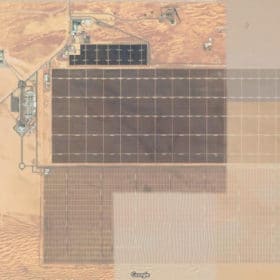
Stanford-UAE collaboration tightens solar module forecasting performance
Utility DEWA is leveraging space technology to improve forecasting as the nation continues to develop its gargantuan solar park in Saih Al-Dahal, 50km south of Dubai.
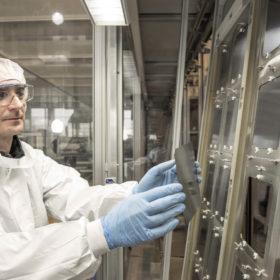
The implications of a messy Meyer Burger-Oxford PV divorce for European perovskites
Last week’s announcement Oxford PV wants to wind up its “exclusive cooperation” with Meyer Burger after the fit out of its 100 MW German factory points to a potential divergence in strategies. And with Meyer Burger considering legal action in response, it could result in a messy, disruptive separation.

UK government launches competition to spur longer duration energy storage innovation
New tech which can store power for longer than four hours can secure up to €14 million each towards their demonstrator project costs.
The Hydrogen Stream: New tech to reduce weight, costs of hydrogen fuel cell vehicles
U.S.-based Hyzon Motors has developed a new onboard hydrogen storage system technology capable of reducing the weight and manufacturing cost of commercial vehicles powered by hydrogen fuel cells. Meanwhile, India’s largest oil provider has announced its first green hydrogen project and the Dutch government has awarded a subsidy contract to an offshore green hydrogen demonstrator.
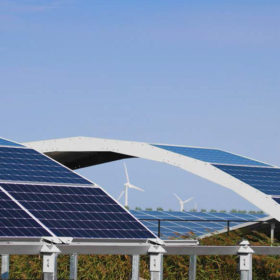
Arc-shaped PV system for agrivoltaics from Germany
The PV mounting system was developed by Germany-based Goldbeck and will initially be available in the Netherlands from 2022. The company will test the new technology in a 45 MW PV project.
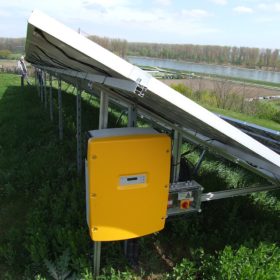
Interoperable SCADA protocols for PV inverters
NREL researchers have developed interoperable SCADA protocols for PV inverters. Two new sets of codes were conceived to enable legacy inverters, which are inverters that are not capable of providing some or all of the grid support functions to participate in advanced distribution management.
